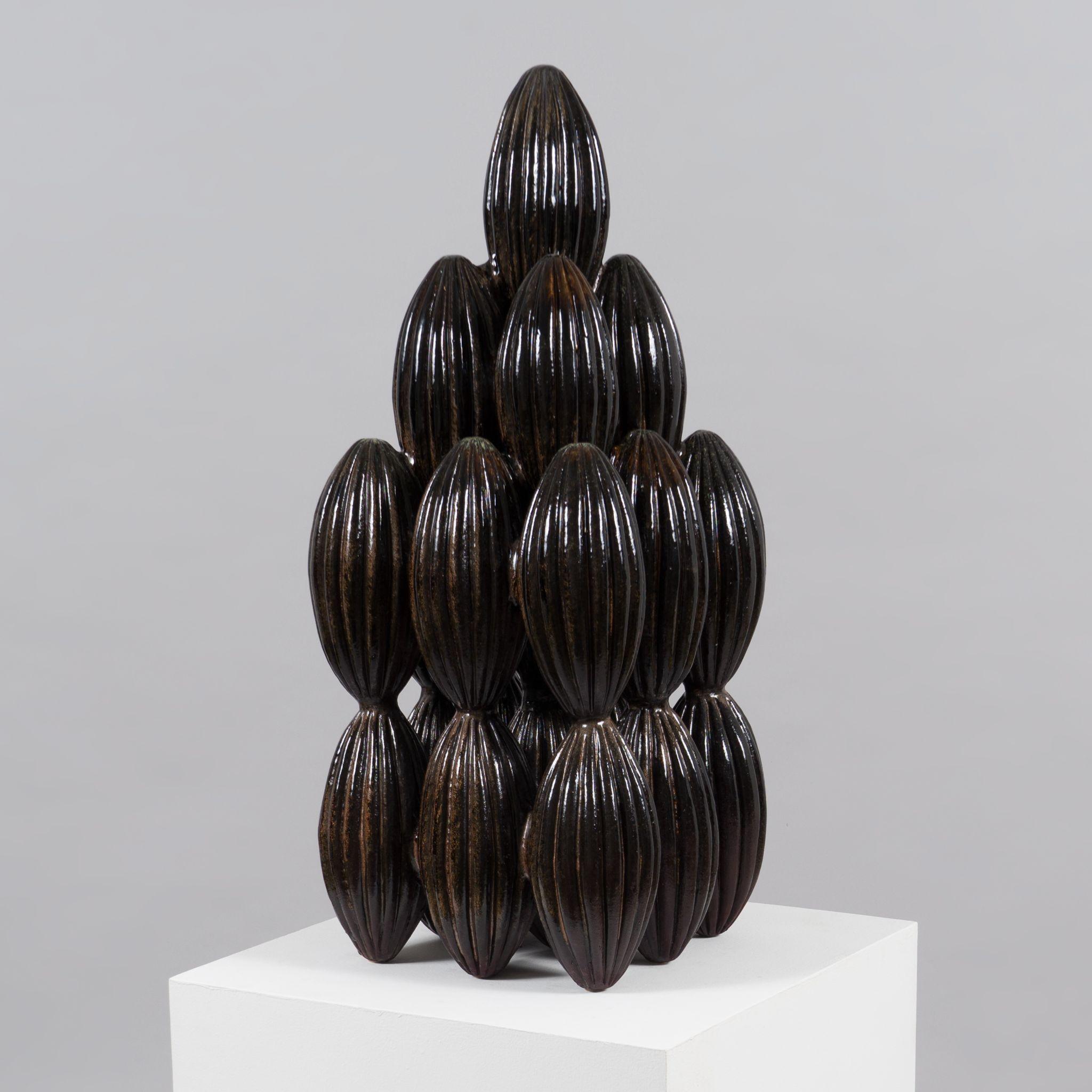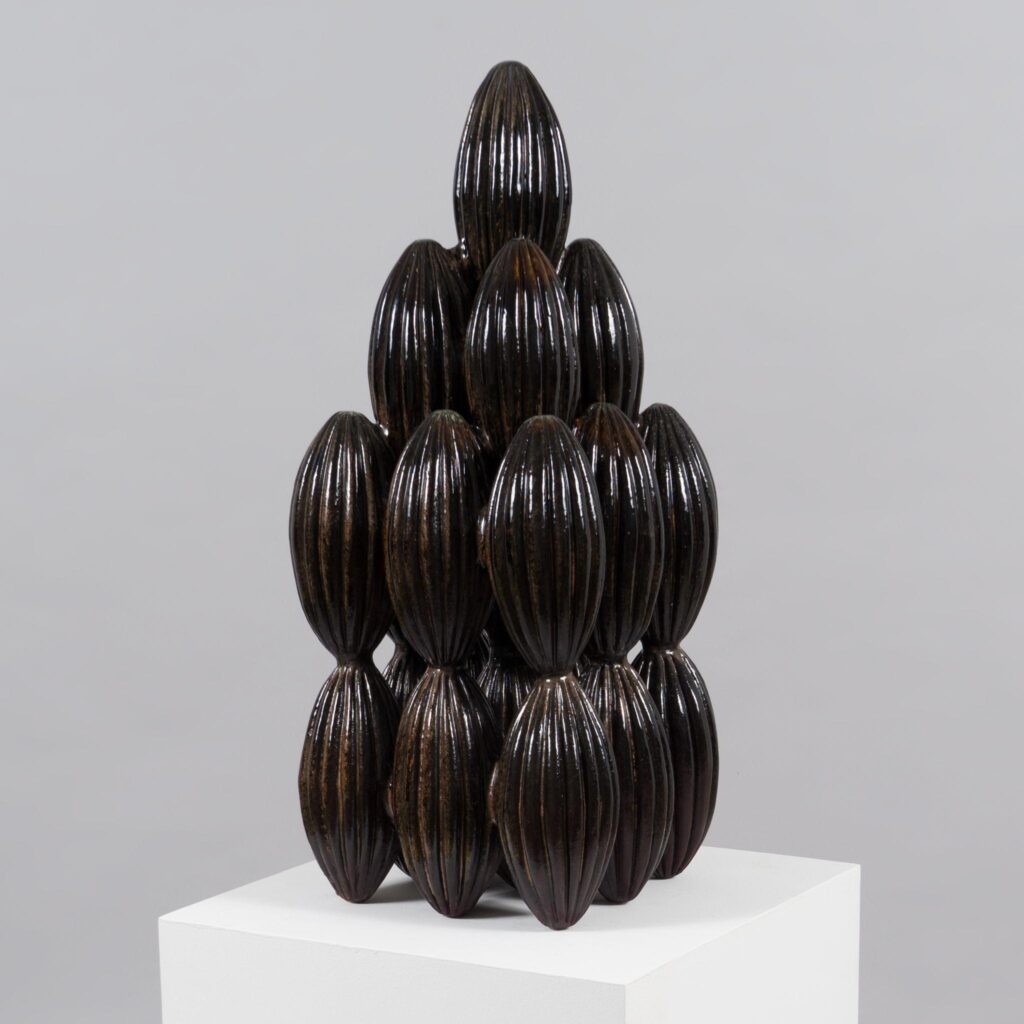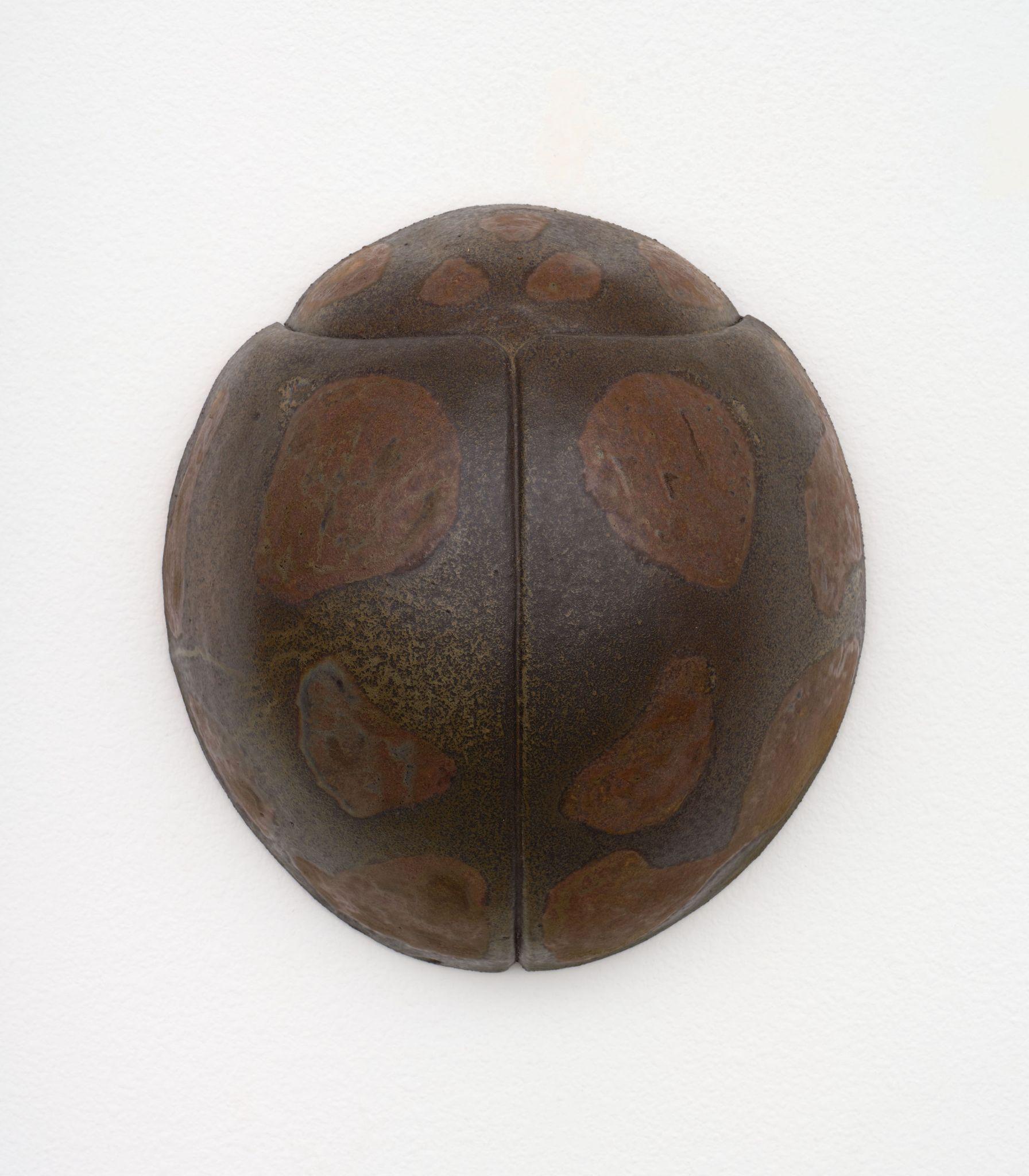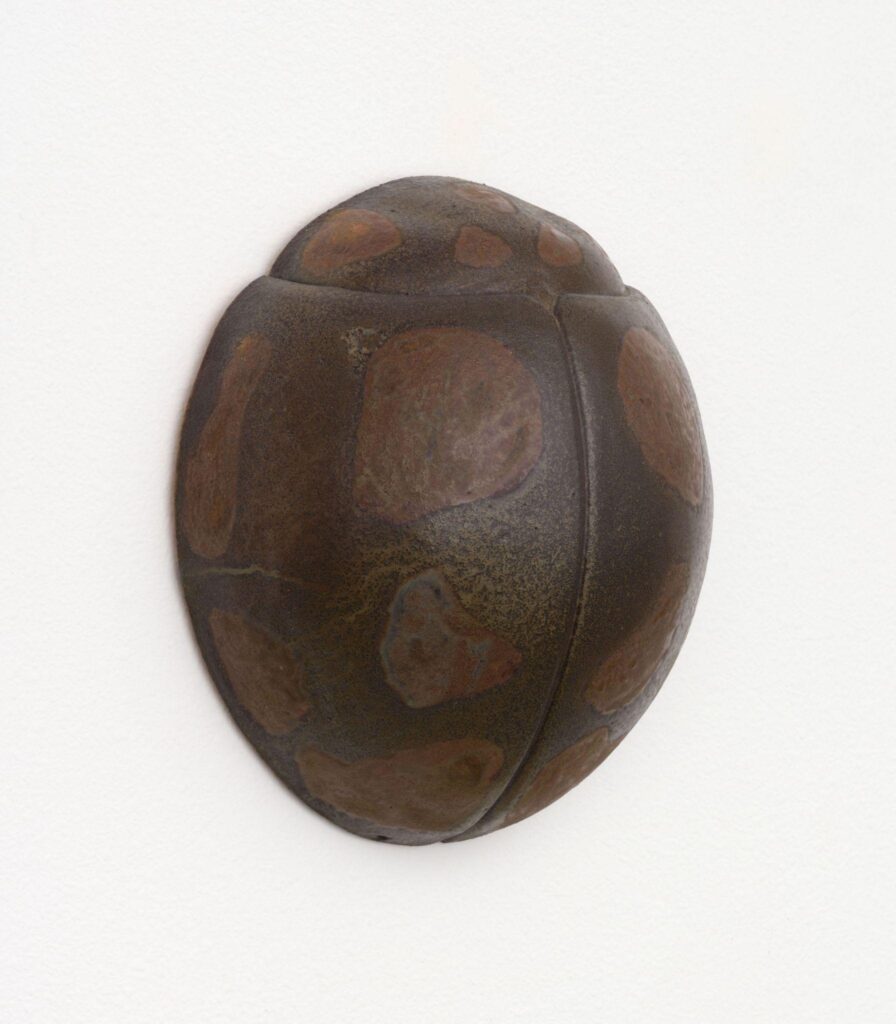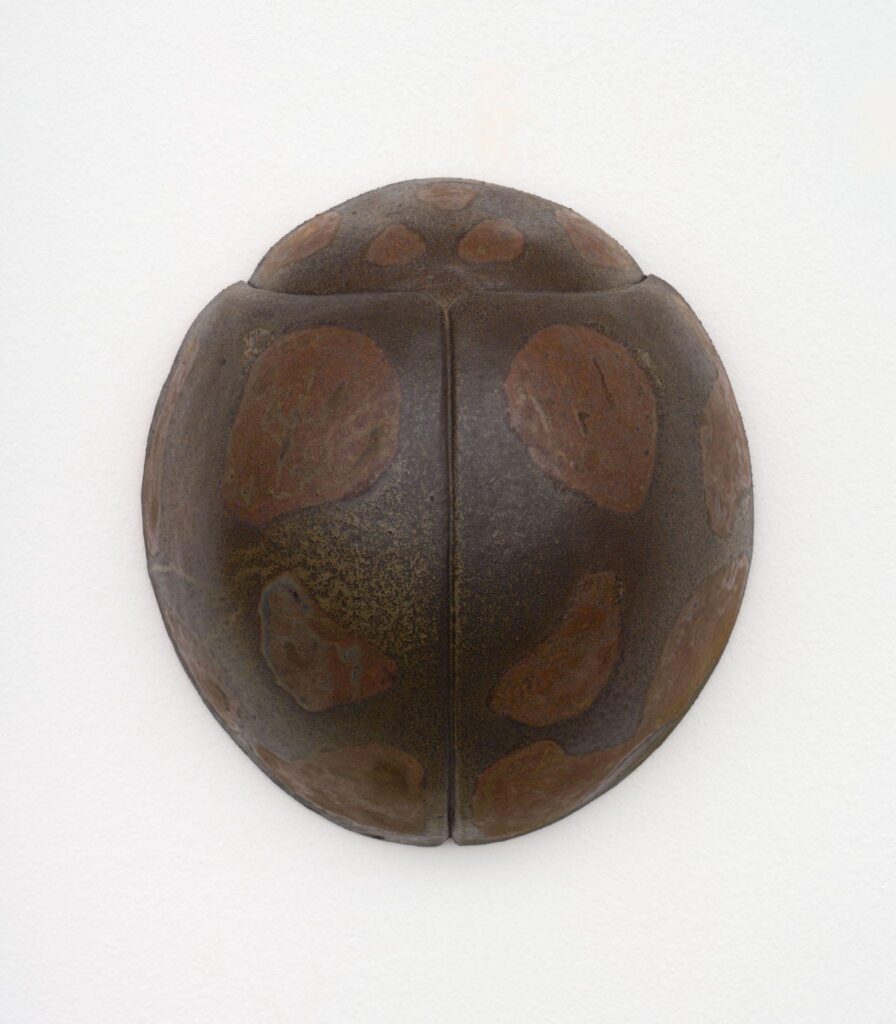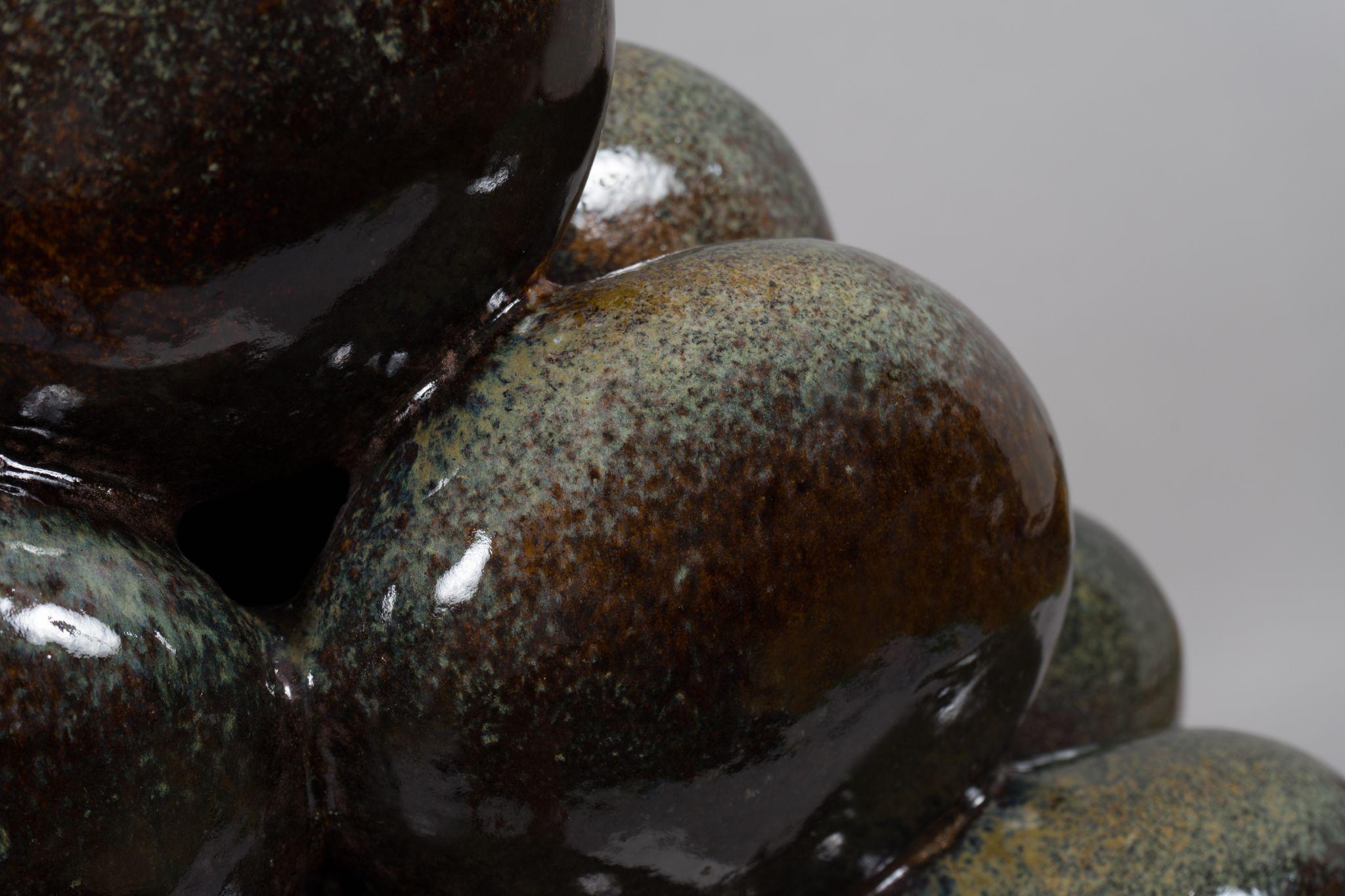
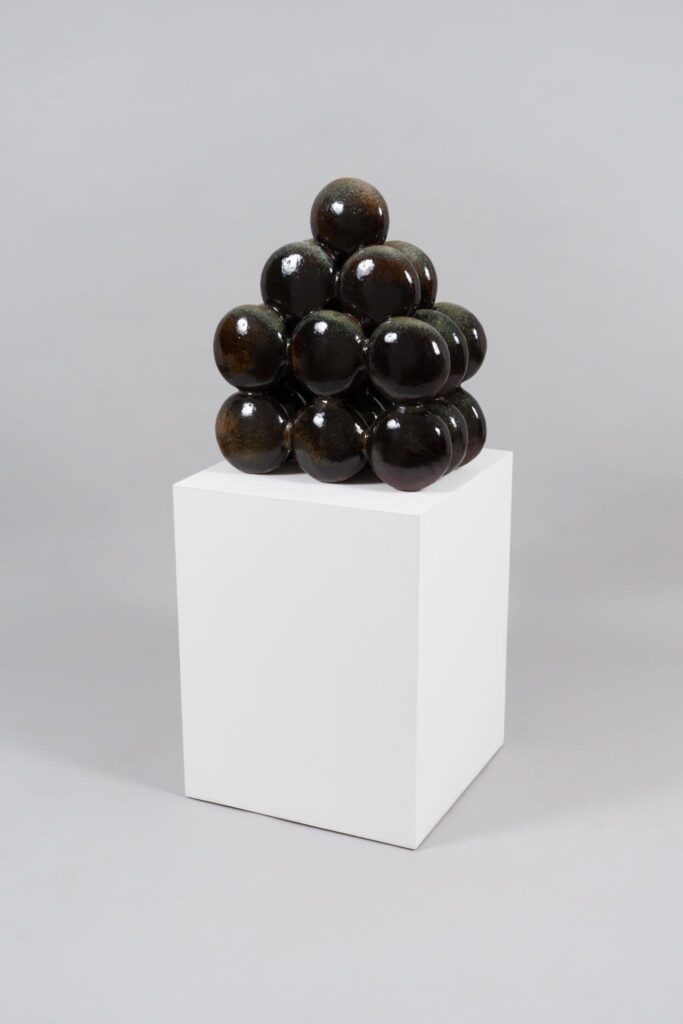
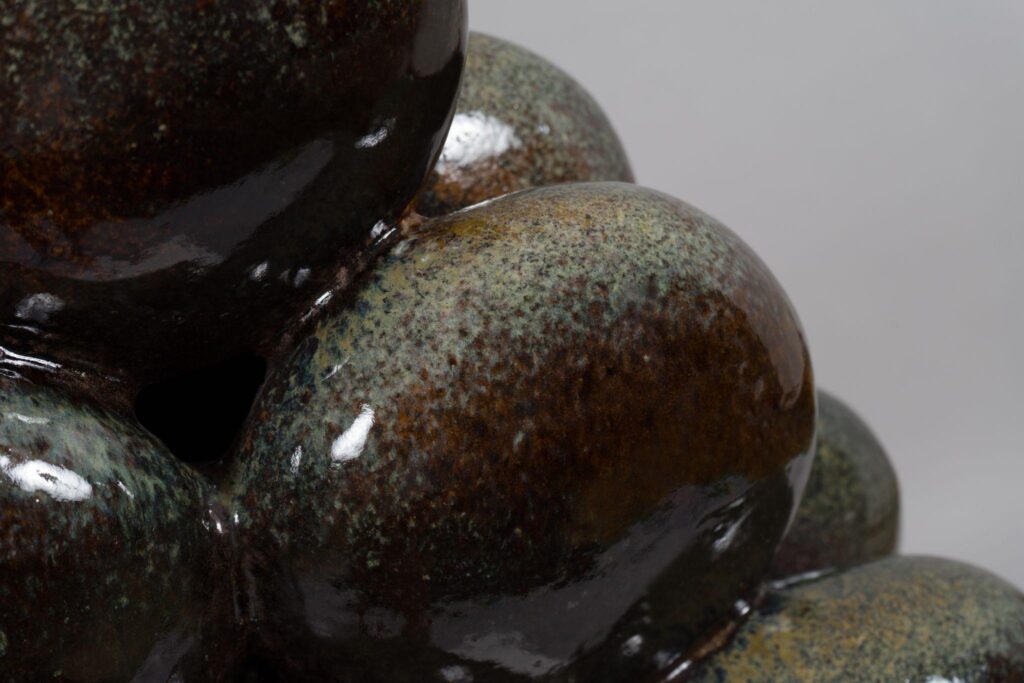
Bodegón (arepas).
Glazed earthenware.
22 x 48 x 10 in / 57 x 49 x 29 cm.
Made in 2024.
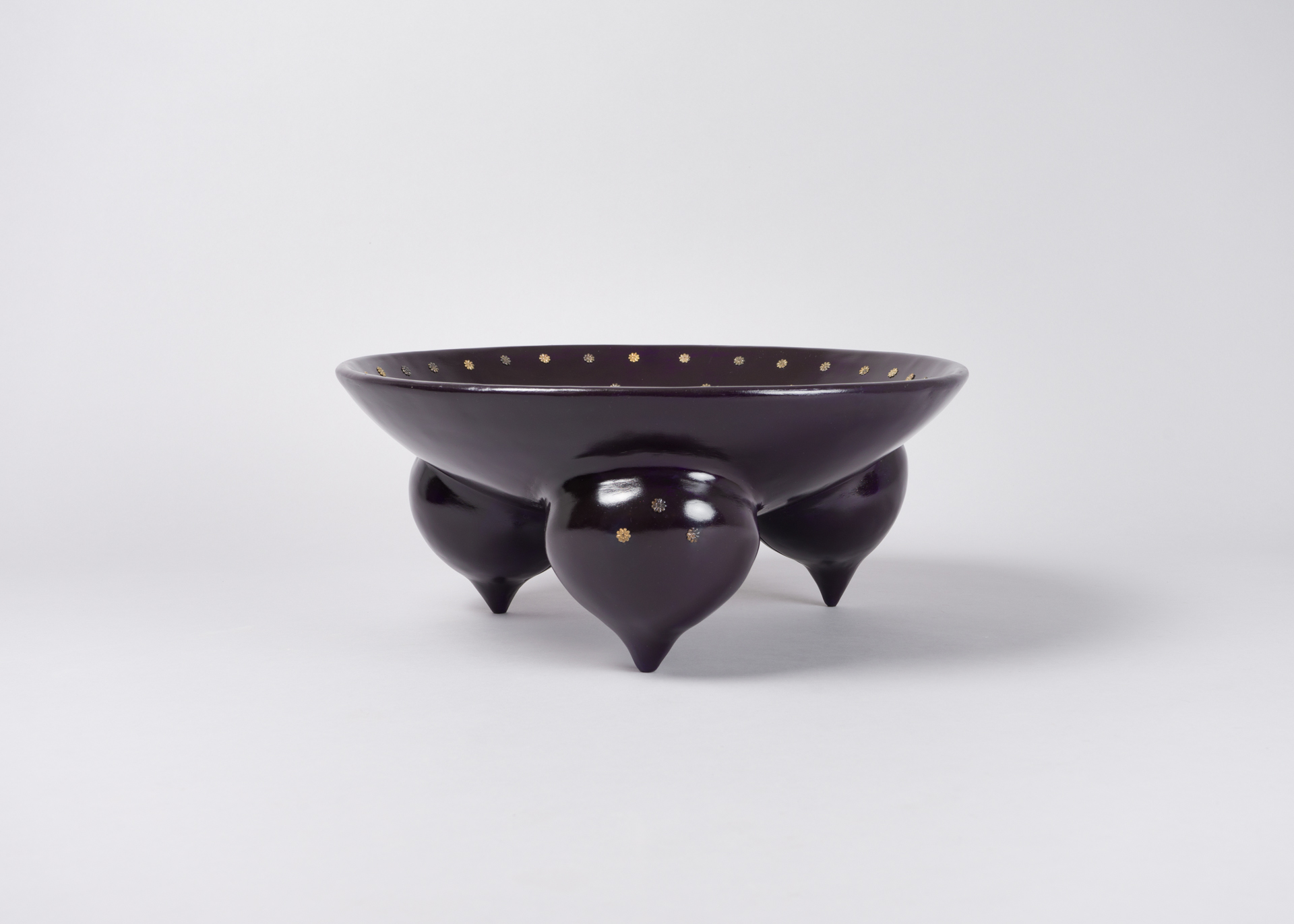
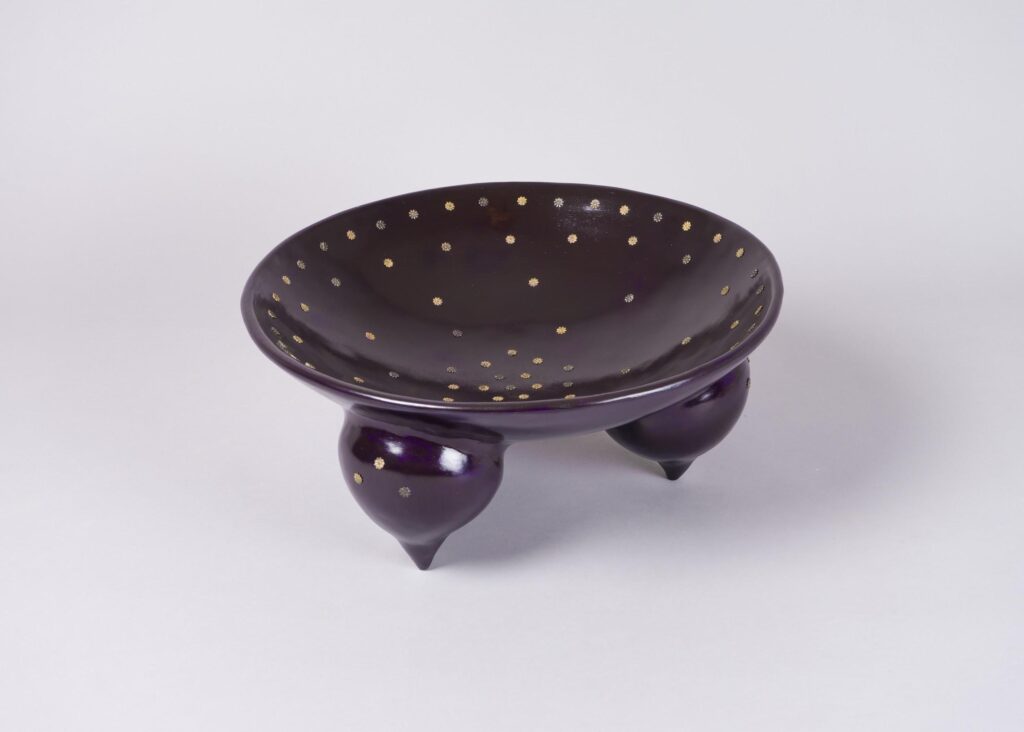
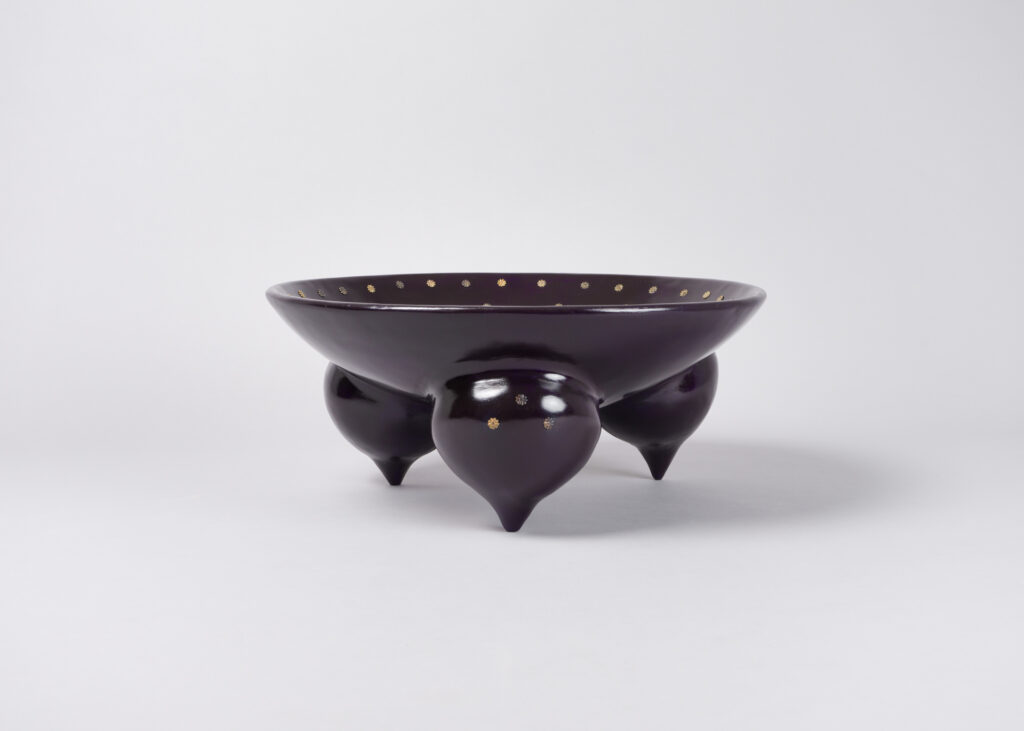
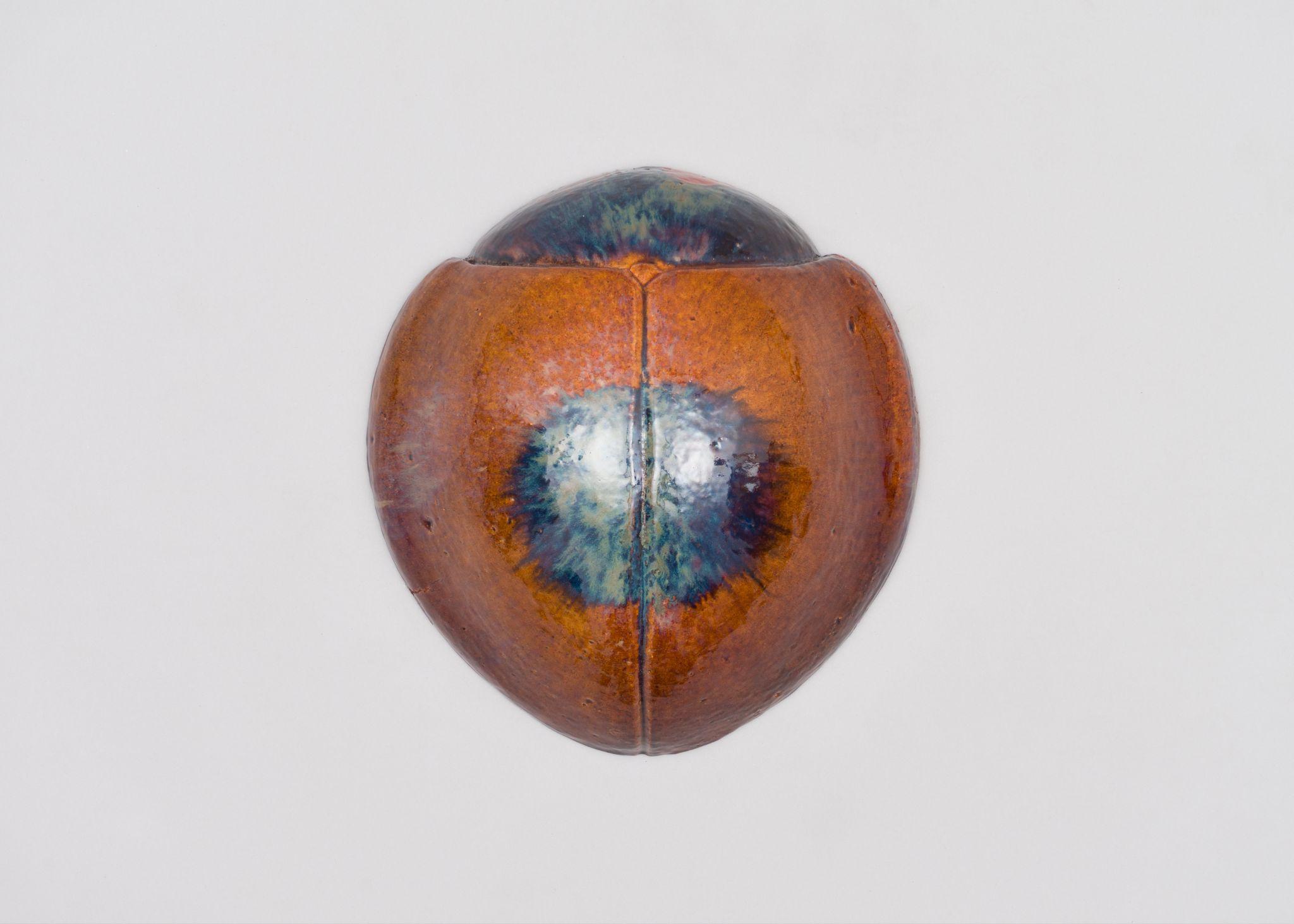
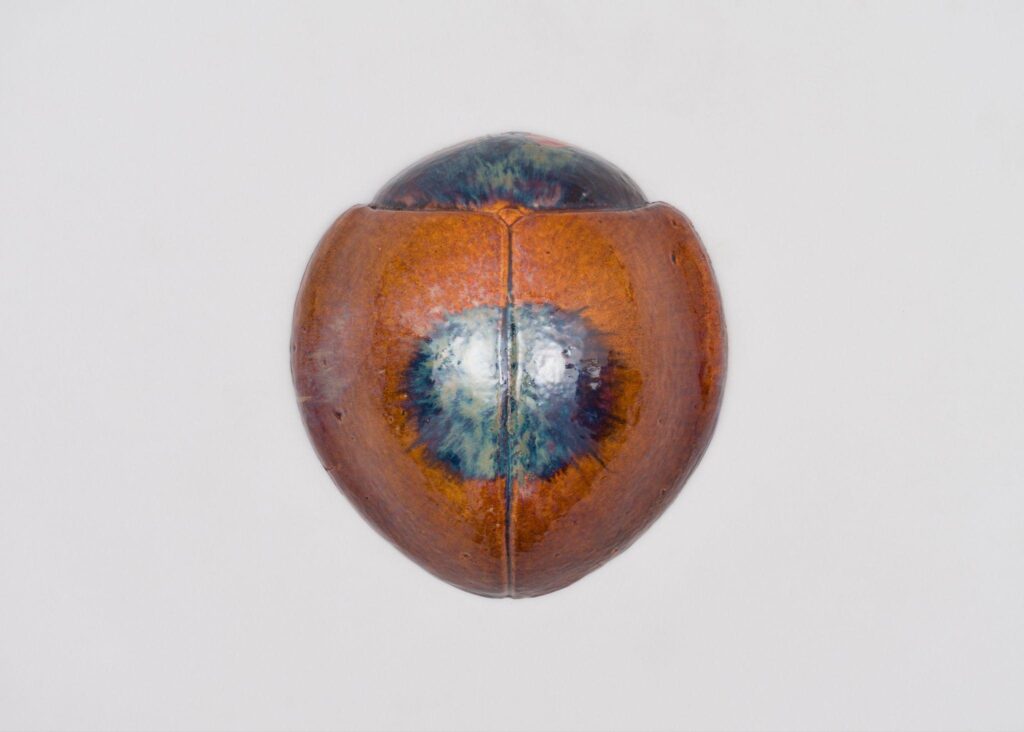
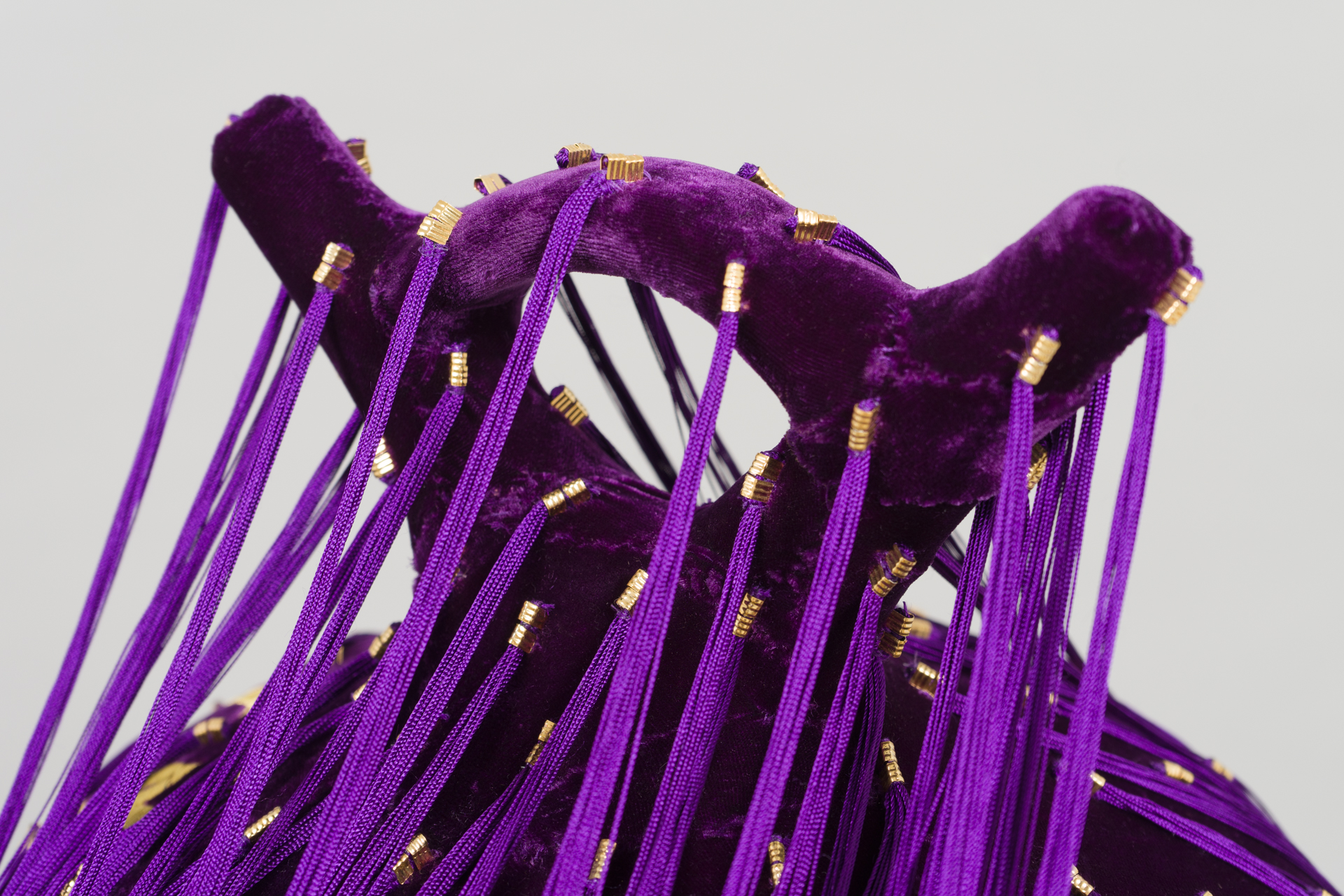
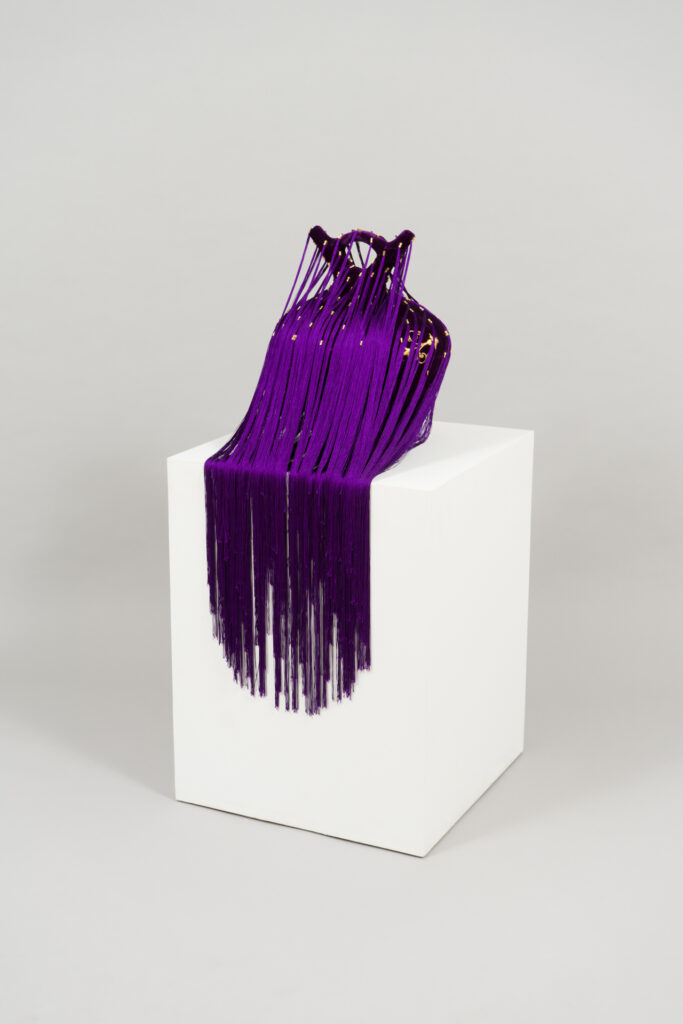
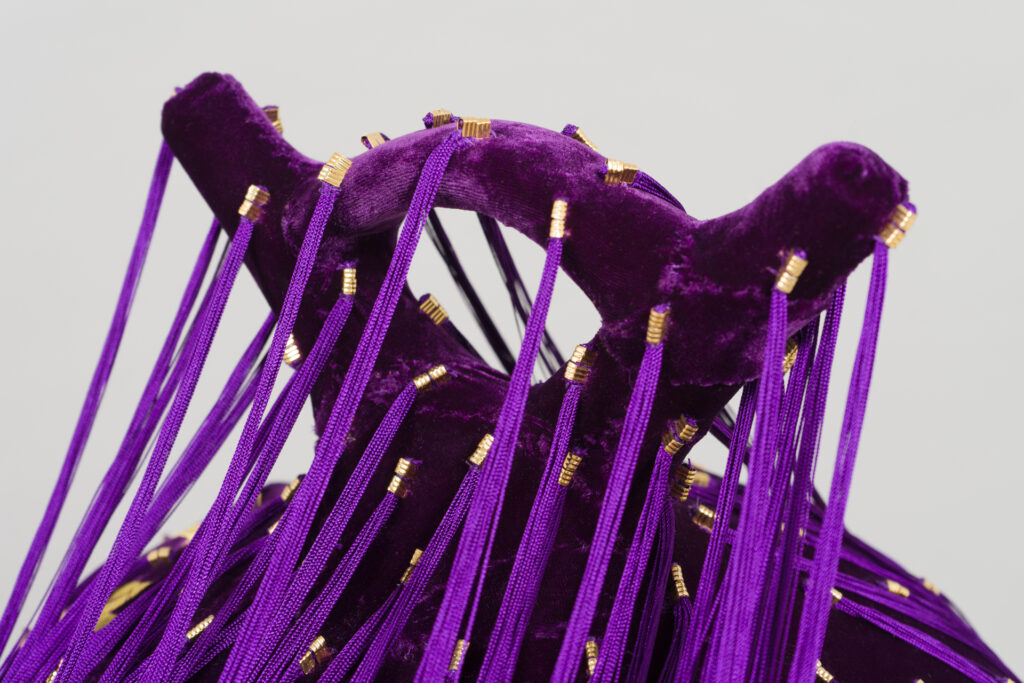
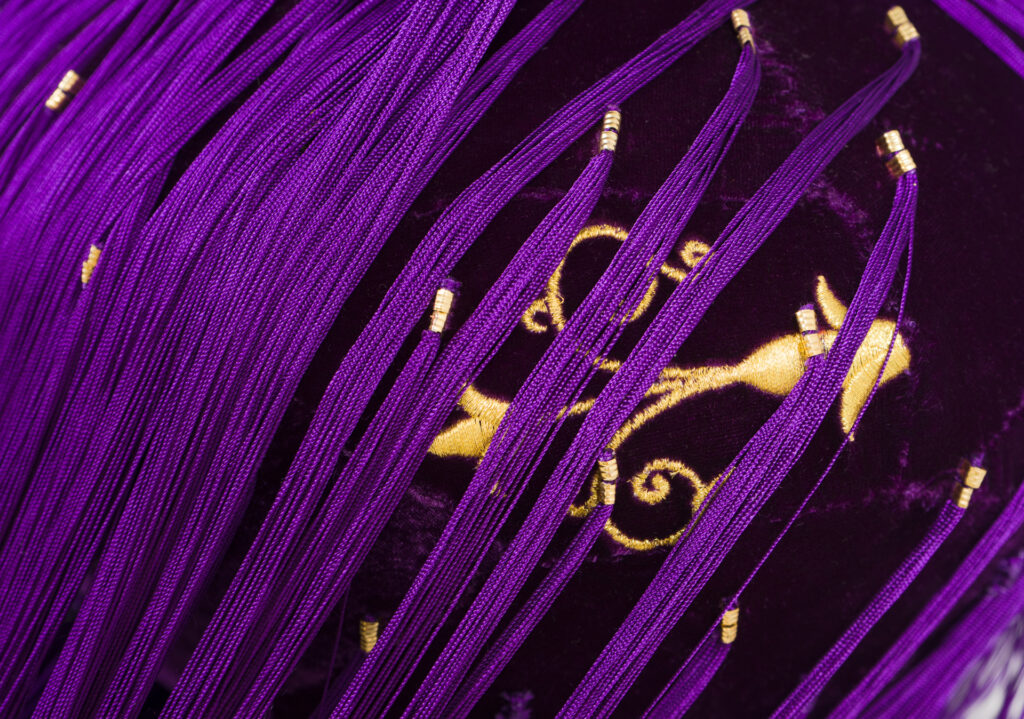
Vasija trípode con manto.
Earthenware, acrylic, nail polish, brass.
8.3 x 19.3 x 19.3 in / 21 x 49 x 49 cm.
Made in 2024-2025.
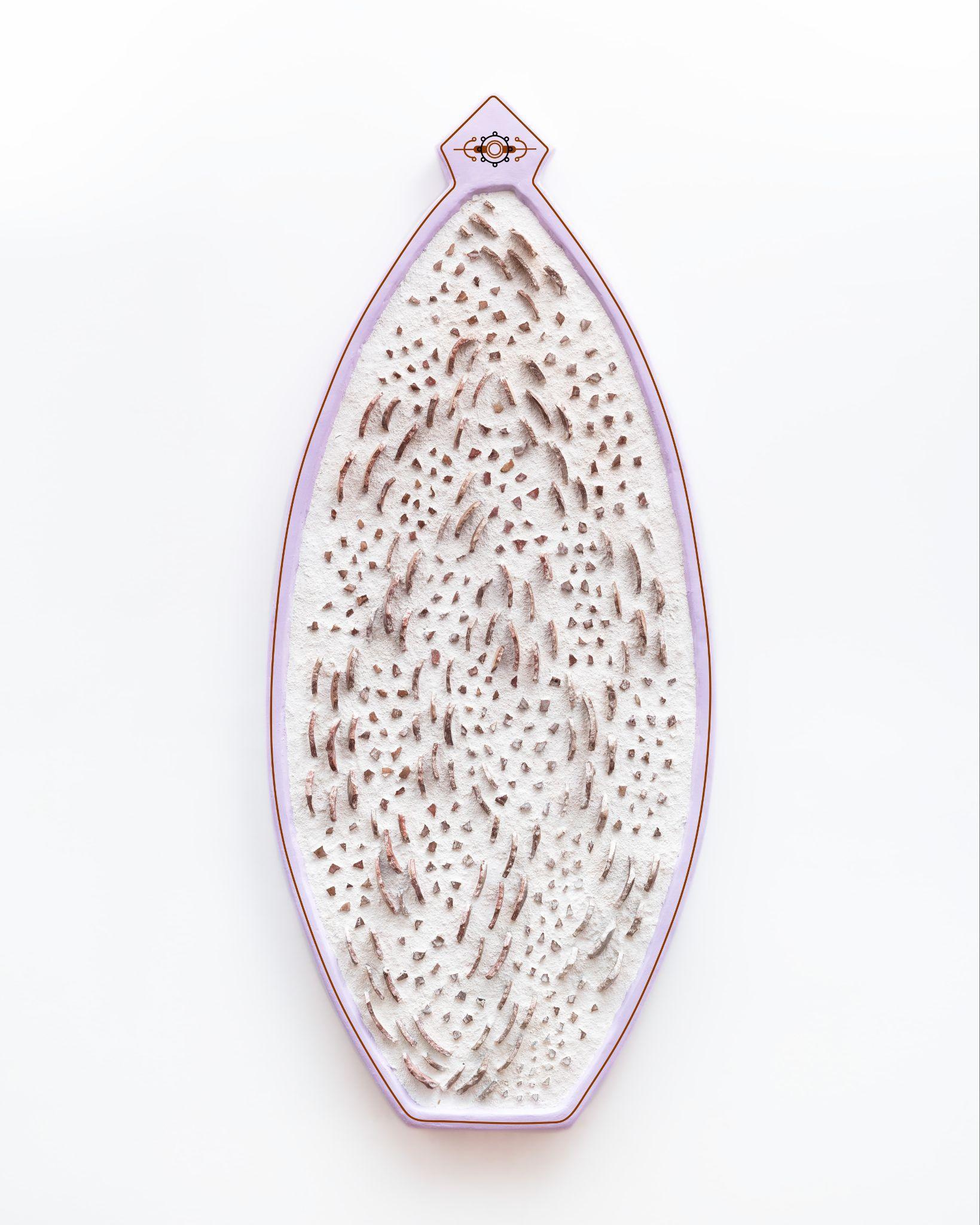
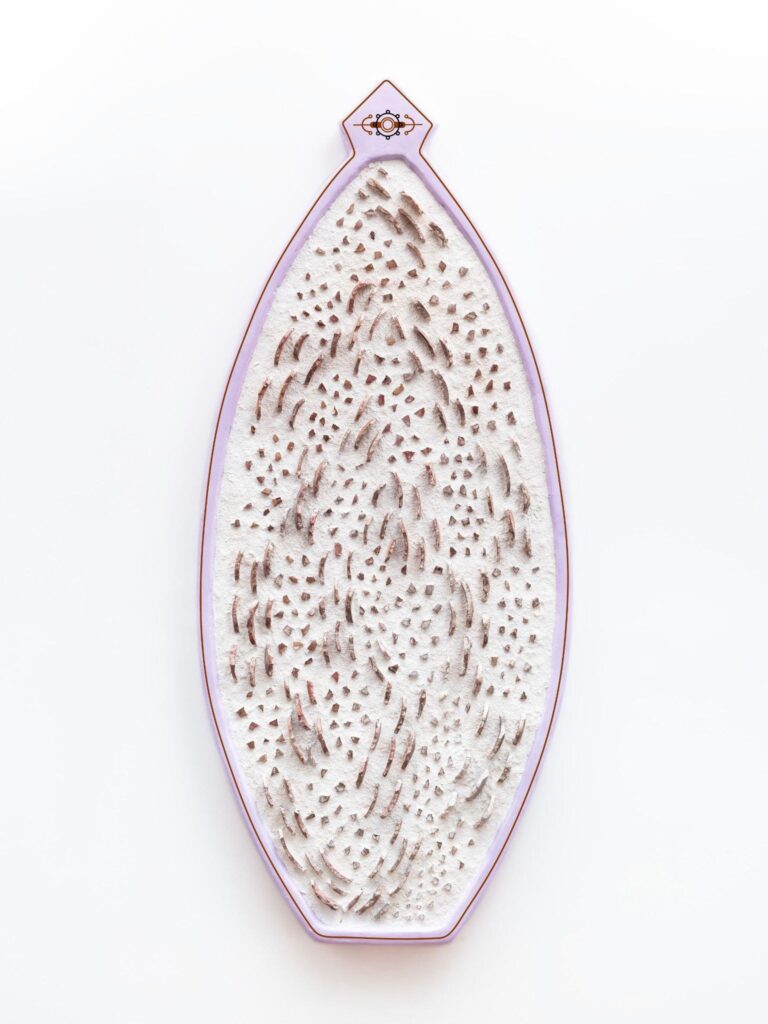
Ictiomorfo.
Enamel, earthenware, limestone and plaster on wooden board.
60 x 25 x 4 in / 152.4 x 63.5 x 10.2 cm.
Made in 2024.
Ictiomorfo references ralladores of Tumaco-La Tolita origin from the
beginning of the common era. Ralladores are thought to have been
used to grind tubers like yuca in the process of making flour and in
some cases to descale fish. These objects which once were staples and critical for sustenance are enlarged and translated into a wall piece that formally and materially references colonial to modern-era building facades and truck decorations from the same region.
Part of a series of wall pieces that reference objects of Tumaco-La Tolita origin from the beginning of the common era. Namely, they cite ceramic ralladores which are the most commonly found objects from that culture after alcarrazas and cooking pots. Ralladores are thought to have been used to grind tubers like yuca in the process of making flour and in some cases to descale fish. These objects which once were staples and critical for sustenance are enlarged and translated into wall pieces that formally and materially reference colonial to modern-era building facades and truck decorations from the same region.
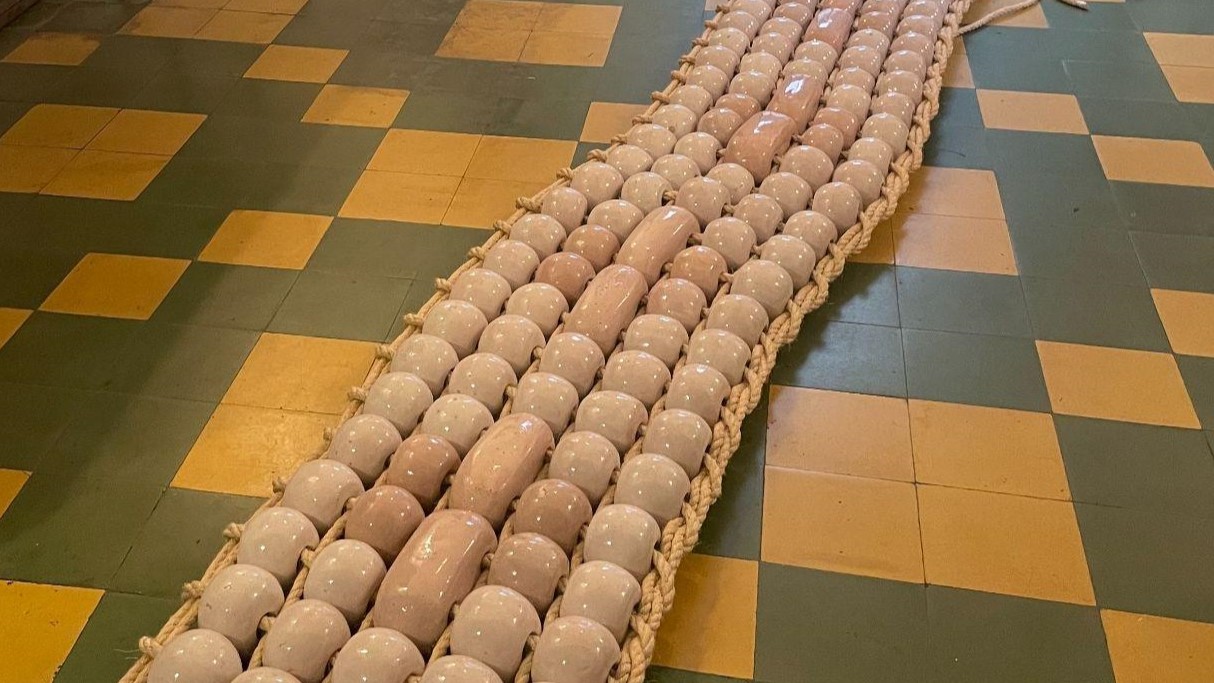
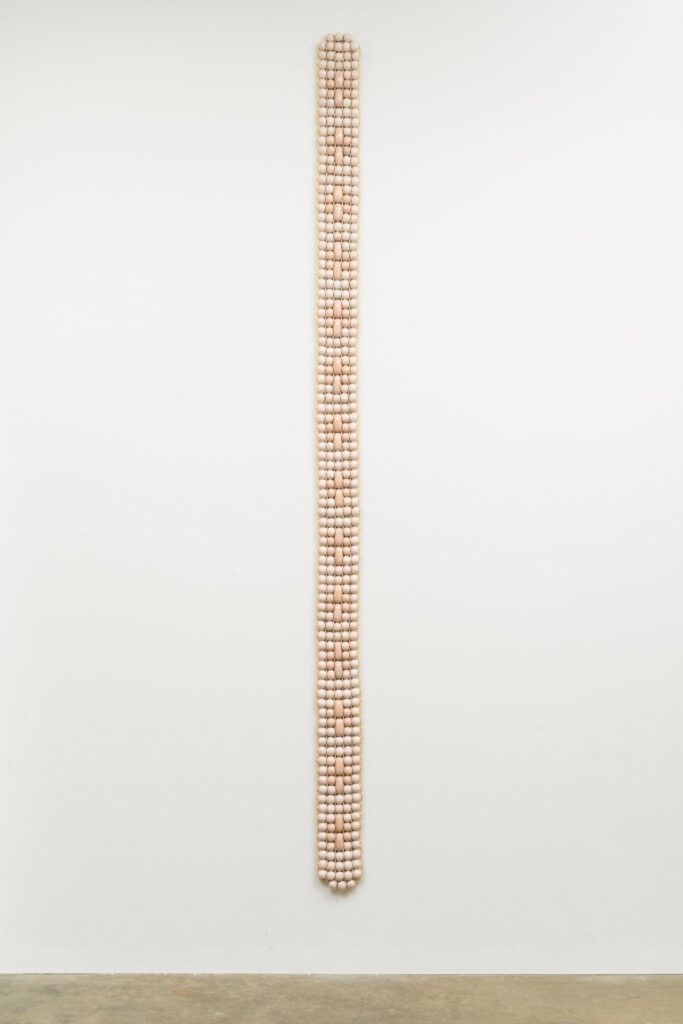
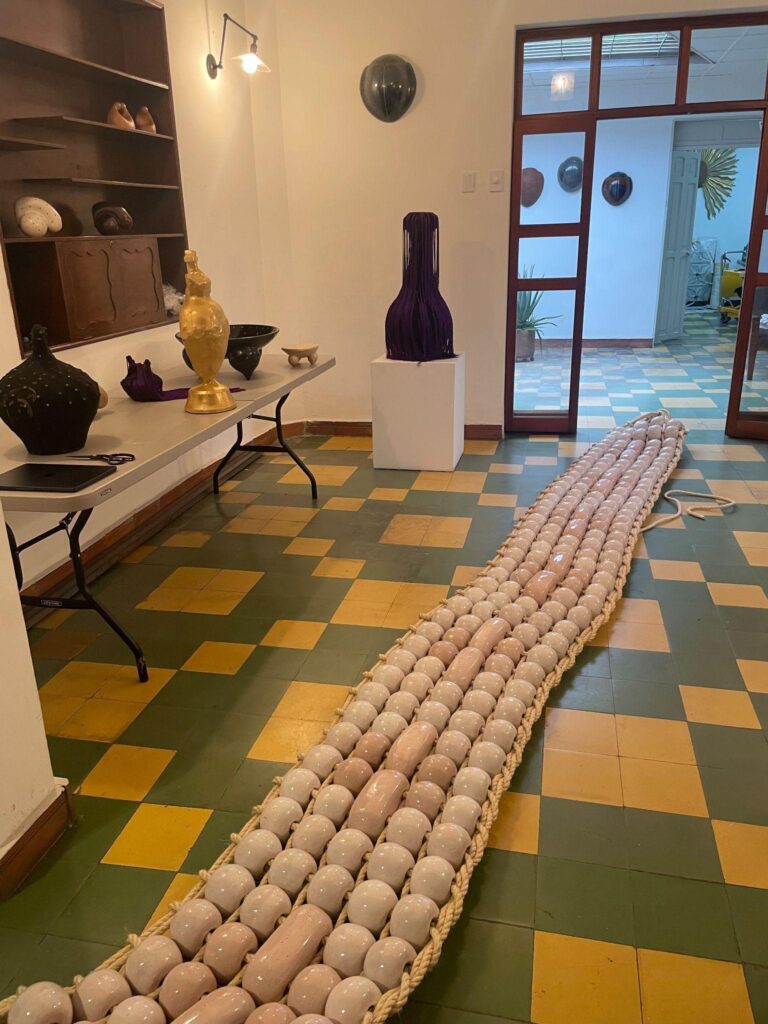
Manilla (mariposas).
Earthenware, fique rope.
307.1 × 17.7 × 4.3 in / 735 cm x 60 x 10 cm
Made in Colombia in 2023-2025.
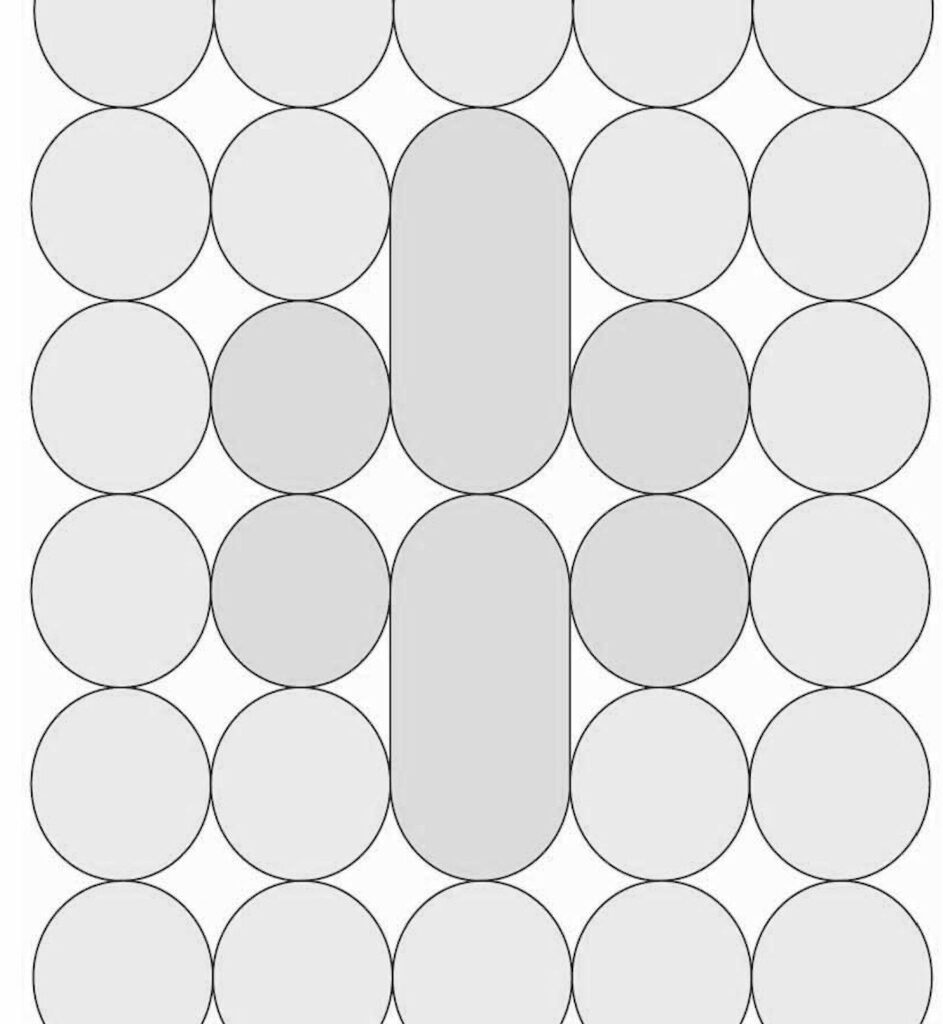
Manilla (mariposas) is a 25-foot tall beaded bracelet woven with fique rope. The motif repeated throughout is an abstraction of a penis and its reflection that also represents a butterfly, as indicated by the title. The male organ is present here in a coded and feminized way. In this work, the enlarged scale of the bracelet and its coded pattern transform an everyday object into a monument to quiet resistance.
This piece also alludes to the artisanal and symbolic
practices of weaving as acts of resistance, identity, and
communal connection. Beads have traditionally been used in
the creation of objects with ritual, aesthetic, and social value
in various communities of the region, and are associated
with the domestic and the feminine. In this work, the
enlarged scale of the bracelet and its coded pattern
transform an everyday object into a monument to resistance
and human bonds.
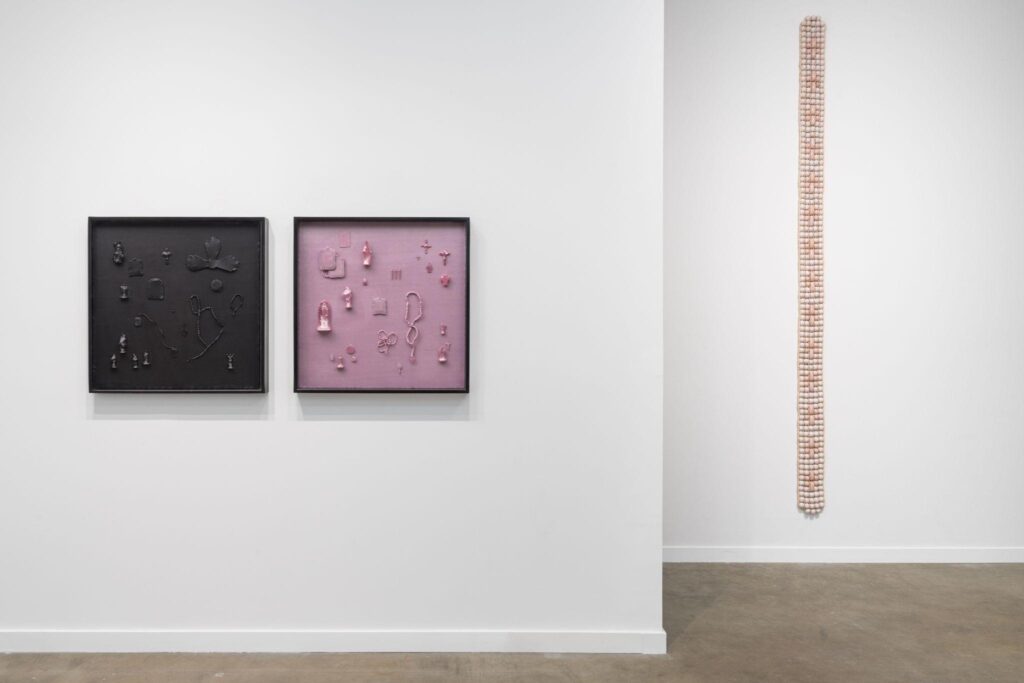
Leyenda.
Found objects, fabric, entomology case.
30 x 30 x 2.5 in / 76 x 76 x 6.4 cm.
Made in 2023-2024
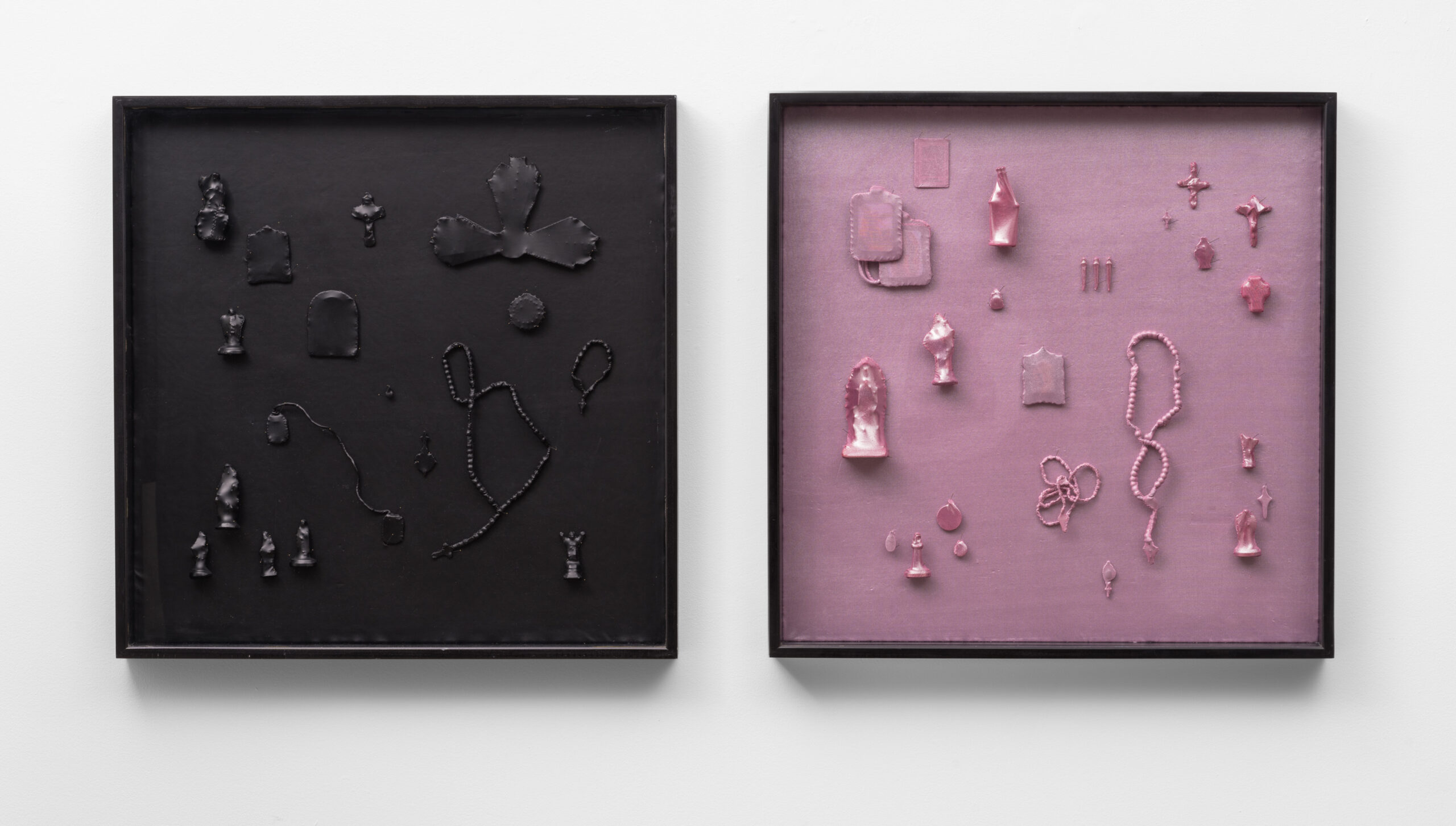
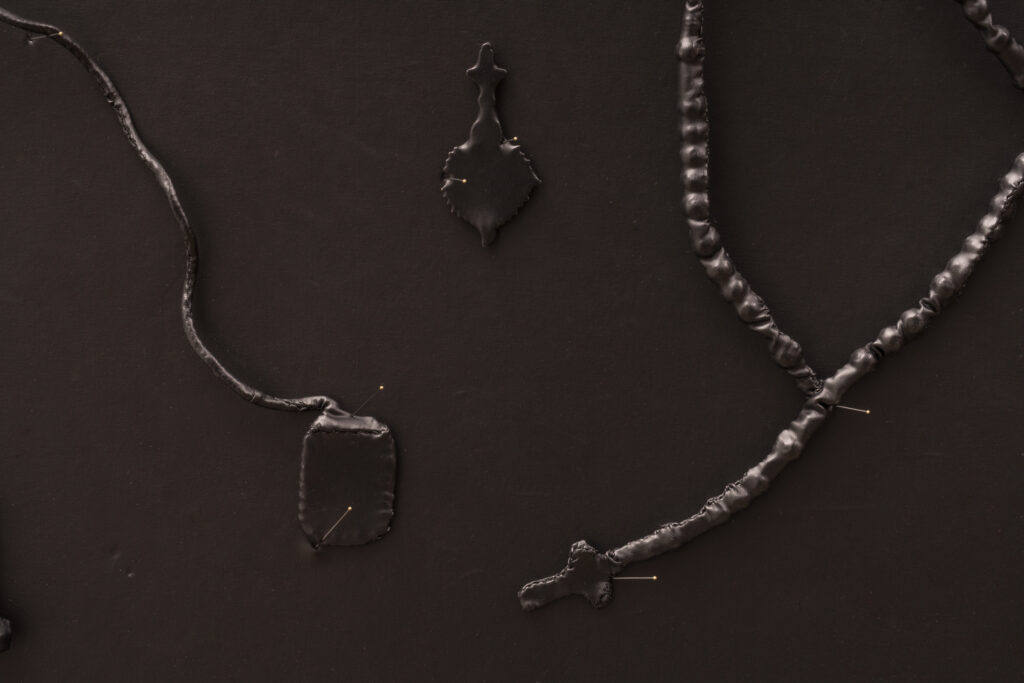
Leyenda is a diptych wall piece giving form to the indeterminate boundaries between cultural reclamation and “ownership” contrived by states and sciences alike. It is comprised of wrapped rosaries, statuettes of saints, and other objects of worship, set in entomological boxes.
The title refers to propaganda campaigns, collectively called Leyenda negra and Leyenda rosa. Leyenda negra began in the 16th century by Dutch and English colonists to portray their Spanish rivals as uniquely violent. Spain retorted with their own Leyenda rosa, their rose-tinted take on their purportedly divinely mandated conquest and colonial activities.
Exemplifying multifarious readings of past and present, Leyenda might be interpreted simultaneously as an observation on collective, even internalized hispanophobia as well as—in the other hand—a smoothing of the impacts of proselytization and settlerism in the Americas.
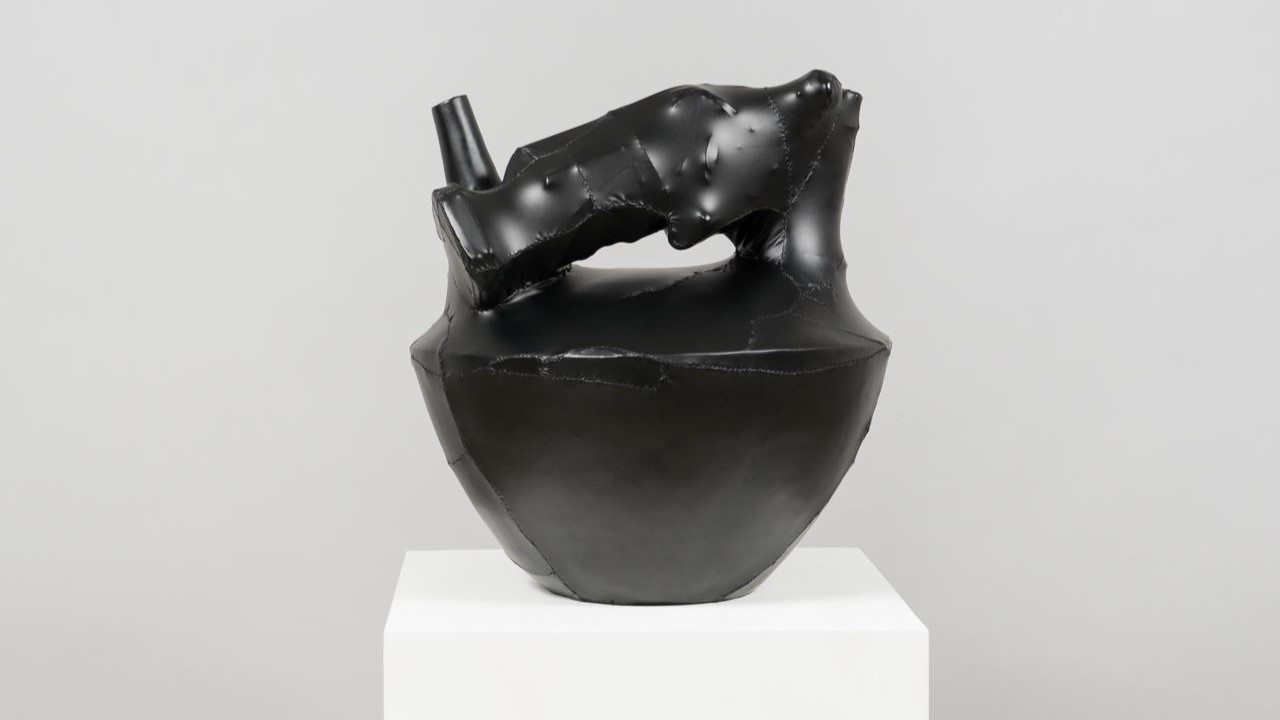
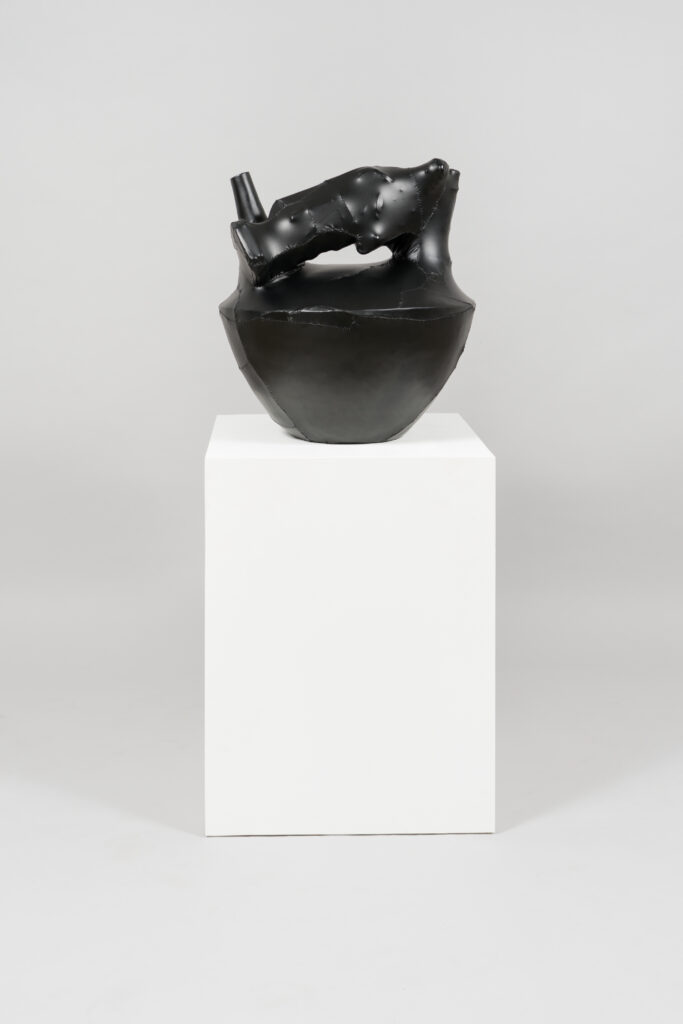
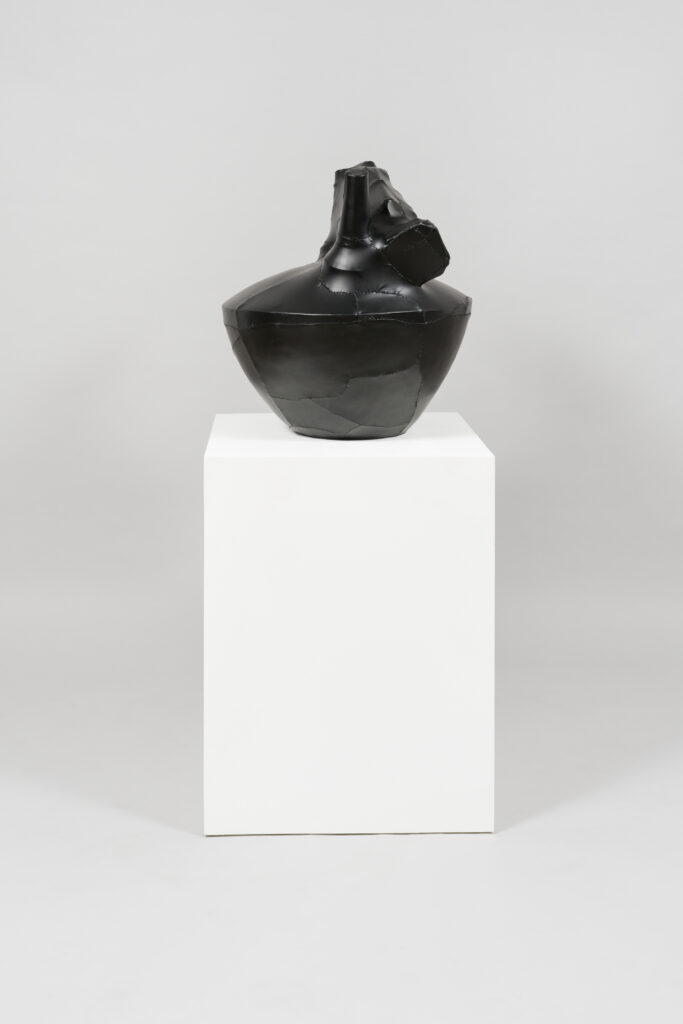
Envoltorio.
Earthenware, found object, pleather.
19-2/3 x 19-2/3 x 21-2/3 in / 52 x 48 x 48 x cm.
Made in 2024.