Asicaz Monzón-Aguirre Ortiz (b. 1987 in Medellin) is an artist whose work focuses on material culture as it relates to processes of ethnic and cultural evolution.
Recent solo exhibitions include Museo de Antropología y Arte de Jericó, Colombia (2025), National College of Arts, Lahore, Pakistan (2024), Stars, Los Angeles, USA (2023), Museo Universitario UdeA, Medellín, Colombia (2022), and Jeffrey Stark, NY, USA (2021).
Their works are in the permanent collections of Museo de Antioquia in Medellin, COL, Rhode Island School of Design Museum in Providence, USA, amongst other institutions.
Since 2011, they have organized several social and cultural programs through the Campos de Gutiérrez Foundation including artist residencies, workshops and exhibitions.
Monzón-Aguirre has received awards and residencies by the National College of Arts of Lahore, NYFA, the Prince Claus Fund, the City of Medellin, California State University Long Beach, and Fundación Casa Tres Patios.
They hold a BFA from Rhode Island School of Design (2009) and an MFA from Alfred University (2019).
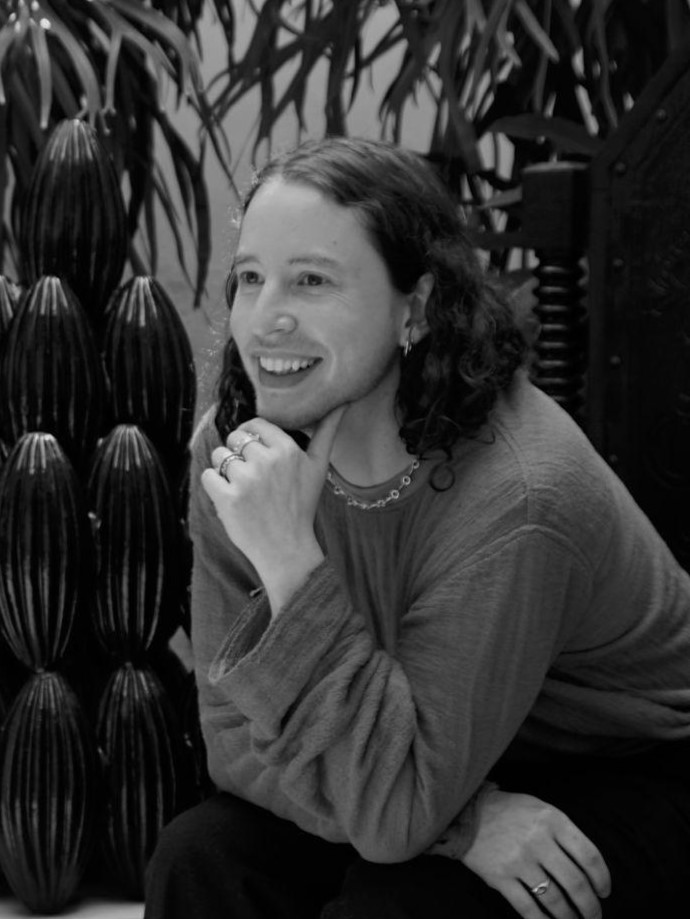
B. 1987, Medellin, raised in rural district.
Parents Luz Estella Ortiz Maya (Biologist) y Carlos Alberto Monzón-Aguirre Echeverri (Constructor, businessman).
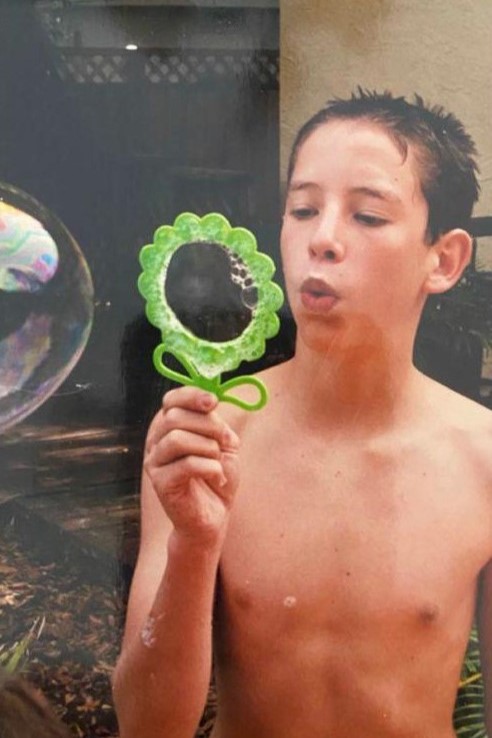
Trips to Colombian Pacific coast and visits by musicians Juan F. Echavarría and Beatriz Vargas Torrez.
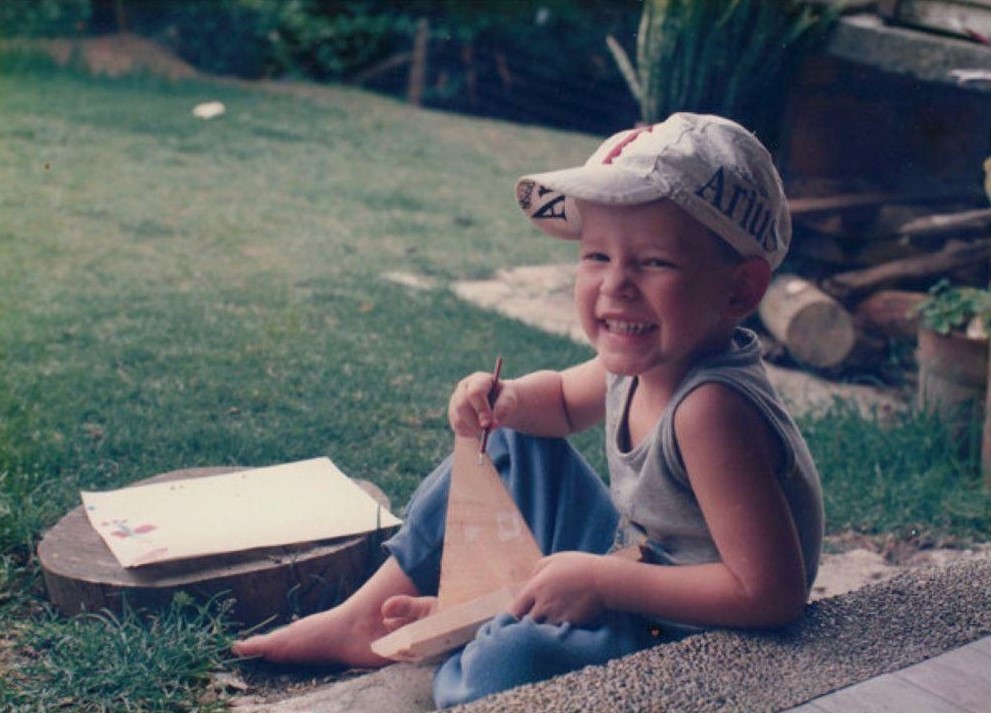
Monzón 1991
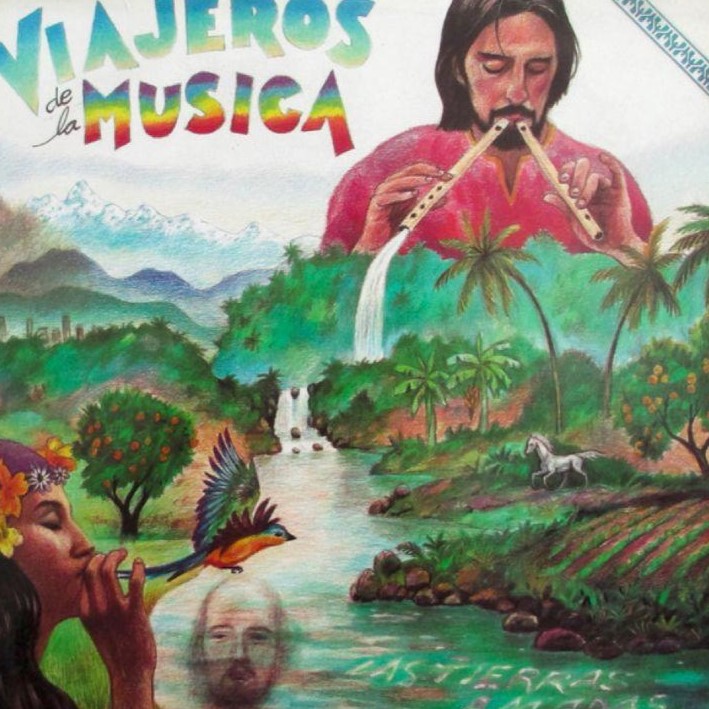
Album Las Tierras Amadas, Viajeros de La Musica, 1992
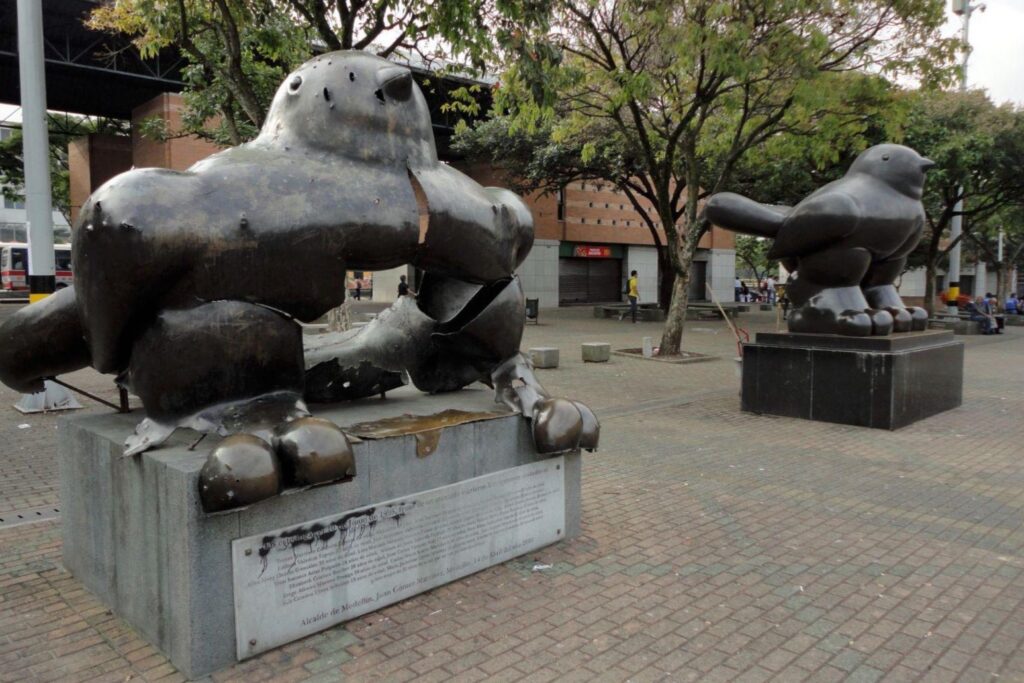
The Bird. Bronze Sculpture destroyed in 1995 in a terrorist attack that killed about 20 and injured 99 people.
Source: El Tiempo www.eltiempo.com
1999. family is forced to emmigrate Colombia.
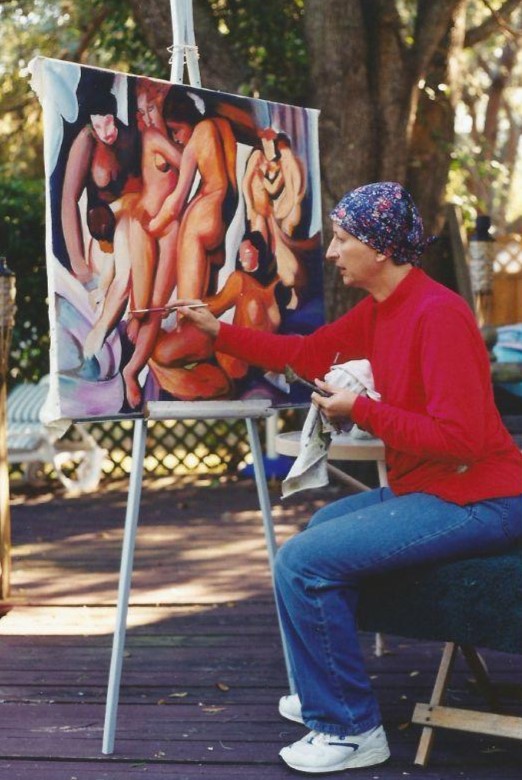
2000. Luz Estella diagnosis with breast cancer.
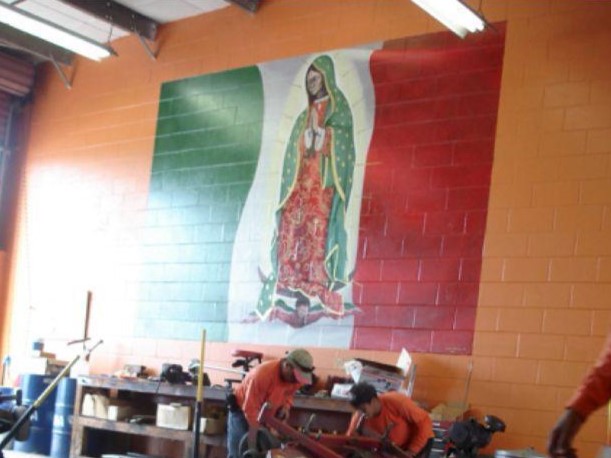
2000-2005. family is based in Florida.
Selected to a “Magnet” school and awarded
USD $10.000 which helps family to push them
towards persuing higher education in art.
2005-2009. Rhode Island School of Design
through loans and scholarship.
Artist Statement
As a naturalized binational subject and first generation migrant I have been in and out of neo-colonized regions all of my life, inevitably adjusting my behaviour according to societal norms and expectations. As such I navigate themes of translation, erasure, social adequacy and cultural exchange. This has made me particularly aware of the interplay between power, ethnicity, gender and land in the shaping of personal and collective identity.
Rooted in the material culture of the Northern Andes, I make artwork that invites viewers to engage with the complex subject of memory and representation. I am the product of a region profoundly impacted by the human and cultural toll of forced disappearance and displacement. Because of this, memory is a central theme in my work, expressed through acts of veiling and unveiling as well as burying and exhuming – both literally and metaphorically. I work predominantly in sculpture, employing traditional forms and ways of building in pottery, metal, needle work, wood, and bahareque as well as modern and contemporary materials like nail polish, pleather and spandex, to create tension and drive meaning into my work.
I often replicate and modify ancient or historical artifacts and in doing so, I reference Experimental Archaeology, a method of research that beyond being a scientific approach, I have witnessed to be instrumental in enacting ancestral memory in regions that have suffered ethnic erasure. Memory, like art-making, is a deliberate, generative act of remembering rather than involuntary experience. I see my work as commemorative and active, a way of paying homage to the legacies of those who came before me while exploring my experience as a 21st-century migrant in the United States and returning member of the Colombian diaspora. My interest lies not so much in the past per se, but in the way historical narratives shape contemporary identities. I am deeply interested in the history of form and iconography, and the politics and ethics concerning the preservation and transformation of memory.