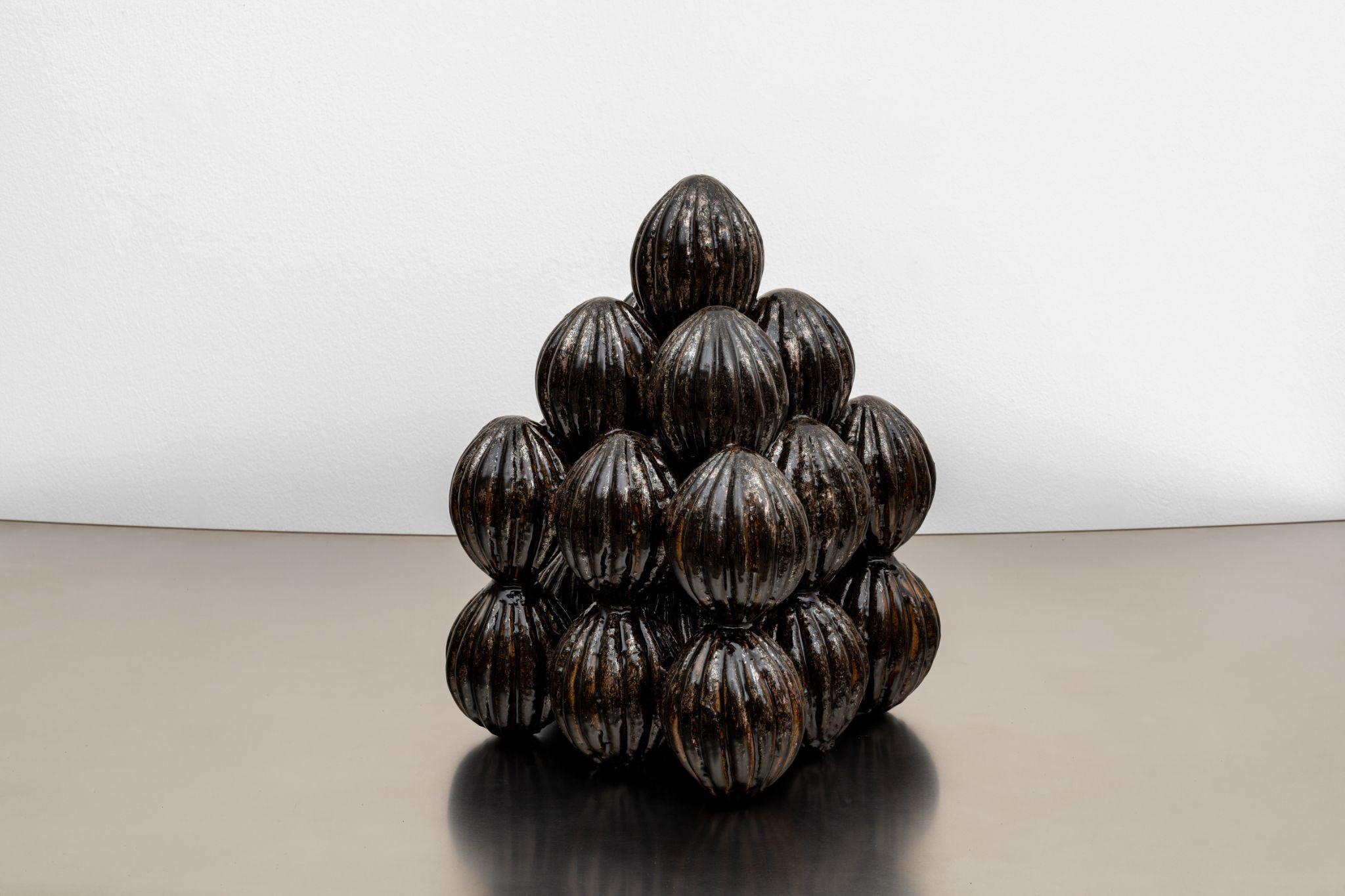
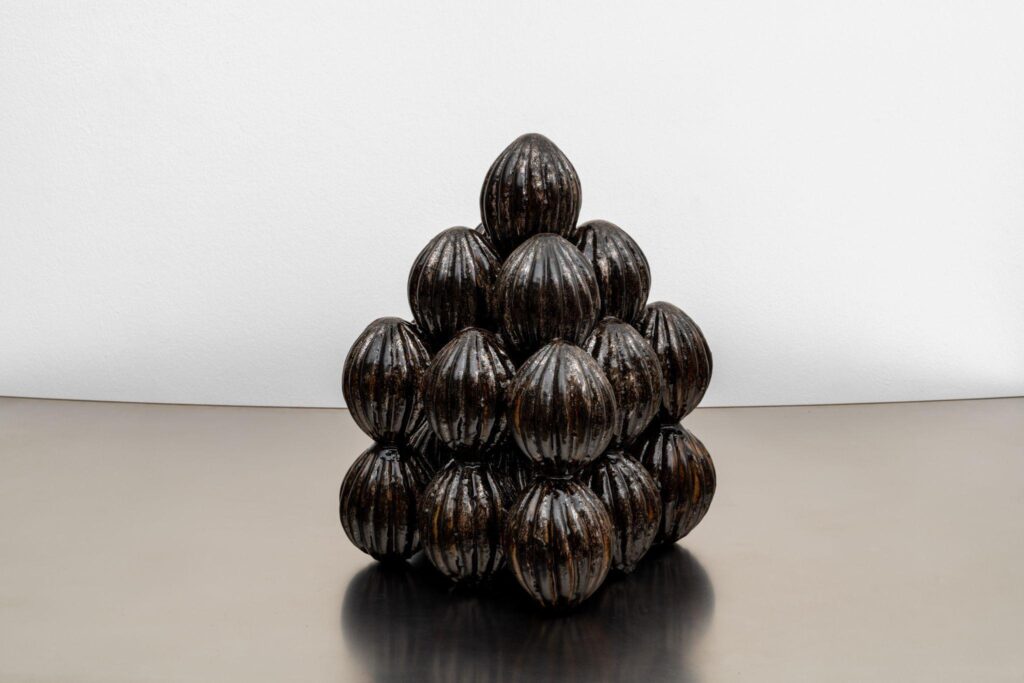
Bodegón (coca).
Glazed earthenware.
18.8 x 13 x 12 in / 48 x 35 x 33 cm.
Made in 2023.
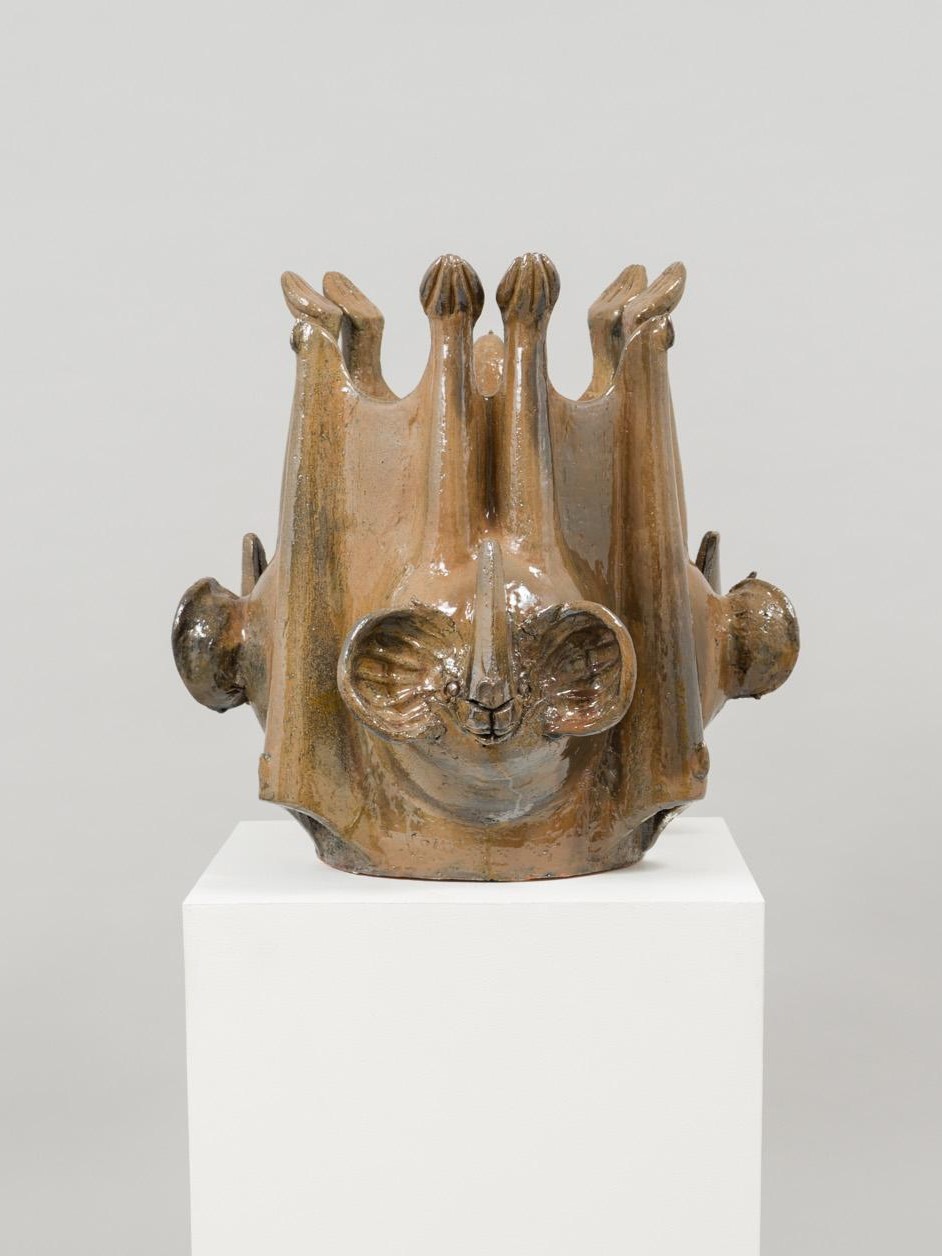
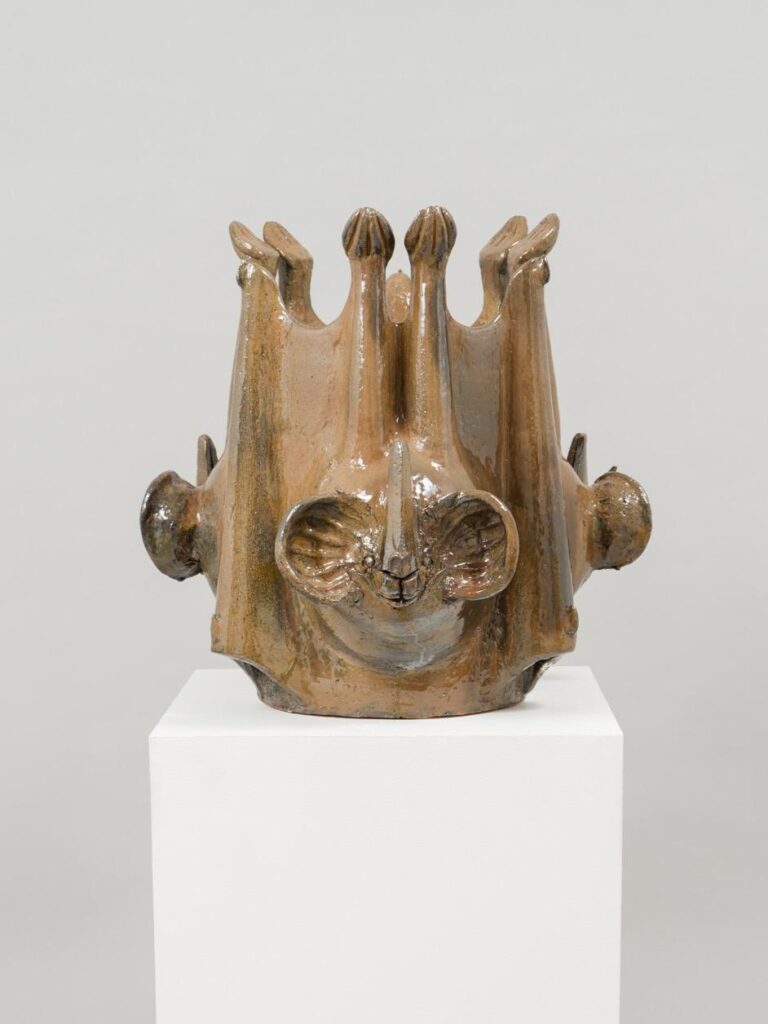
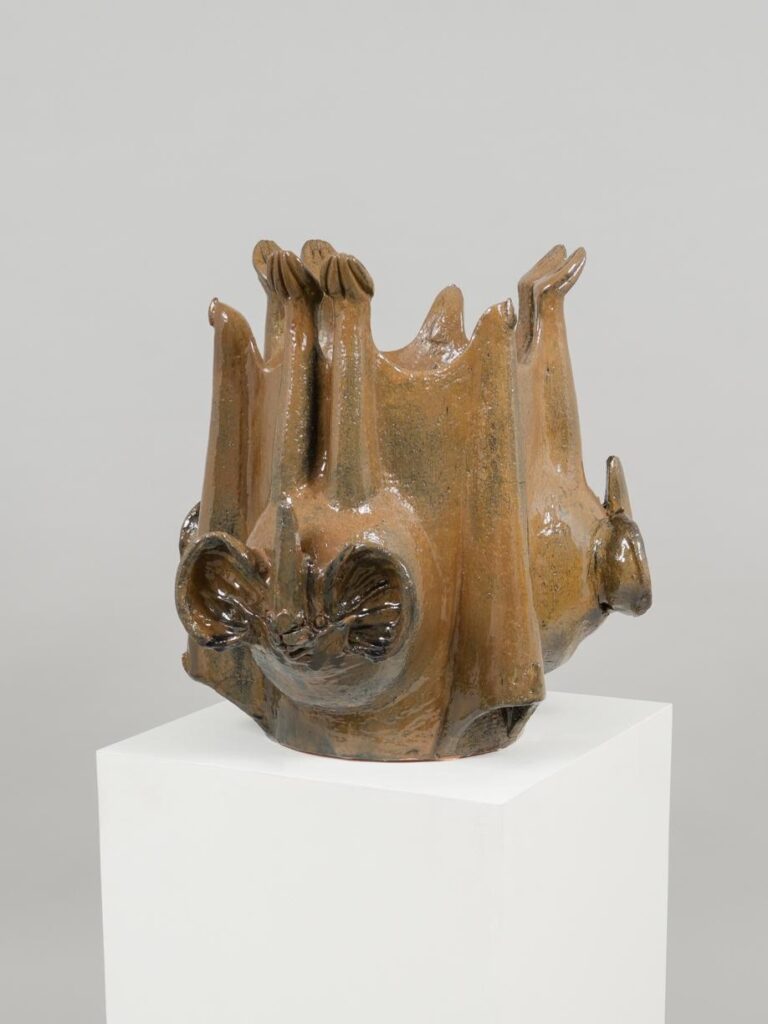
Égida (lonchorhina).
Glazed earthenware.
21.5 x 22 x 21 in / 54.6 x 56 x 53 cm.
Made in 2023.
From the series of three-headed, gargoyle-like vessels with 360º
vision. Various animals are represented in the Égida series, all associated with or endemic to the Northern Andes. They are either mythological, elusive, nocturnal, or at risk of extinction.
The series also includes depictions of serpents, marmosets, jaguarundis, bats and owls.
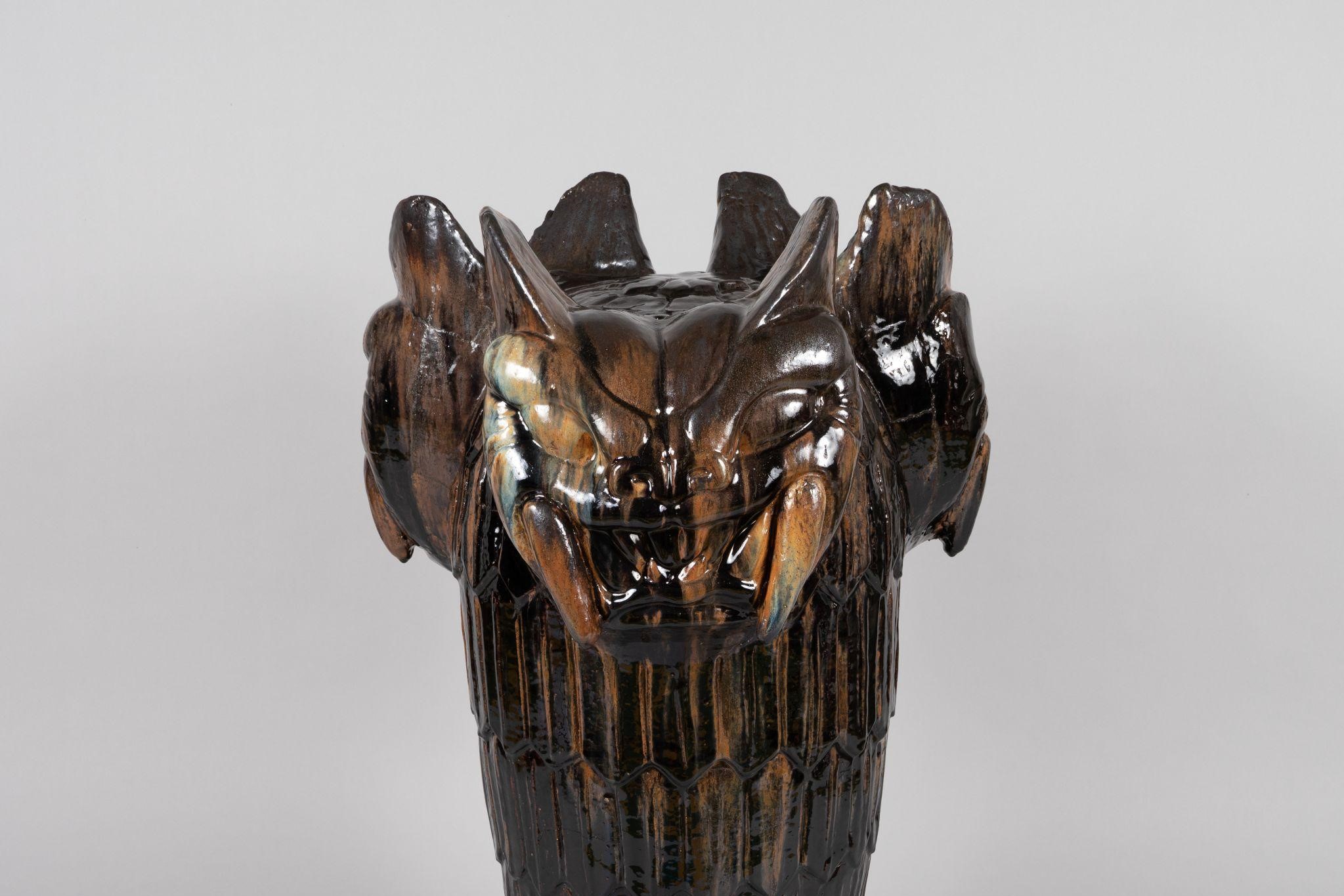
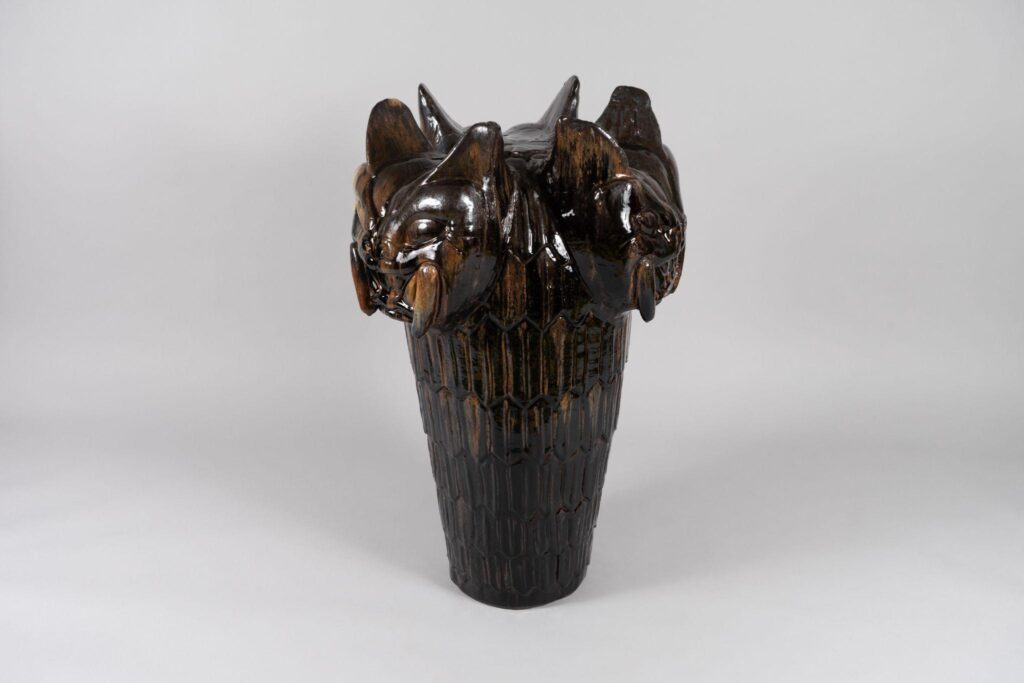
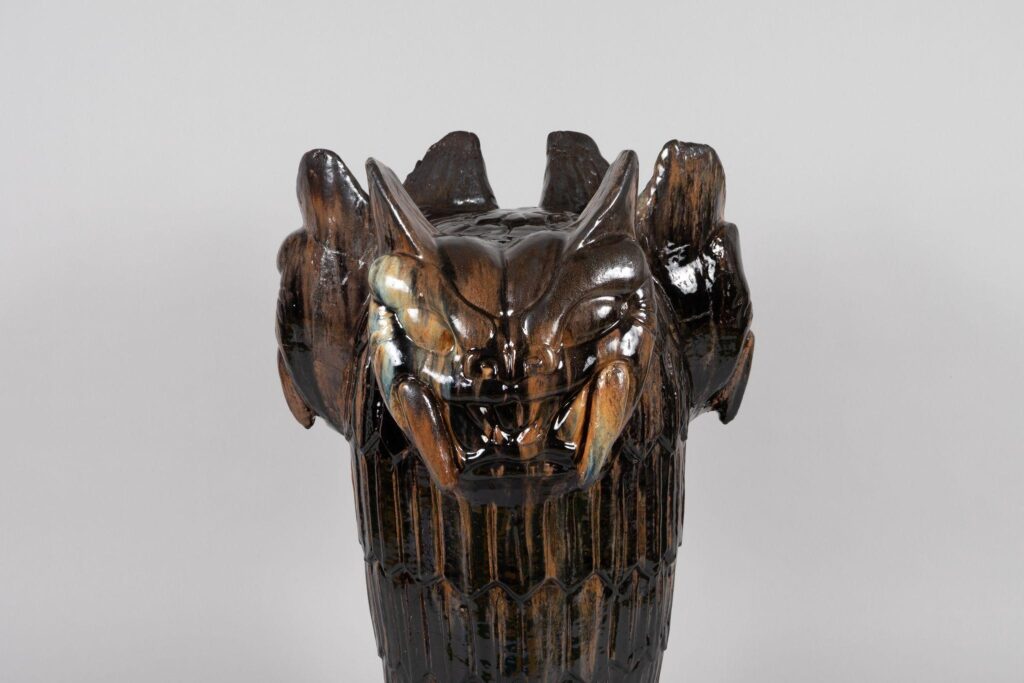
Égida (Jaguar).
Glazed earthenware.
39.5 x 26 x 26 in / 100 x 66 x 66 cm.
Made in 2023.
From the series of three-headed, gargoyle-like vessels with 360º
vision. Various animals are represented in the Égida series, all associated with or endemic to the Northern Andes. They are either mythological, elusive, nocturnal, or at risk of extinction.
The series also includes depictions of serpents, marmosets, jaguarundis, bats and owls.
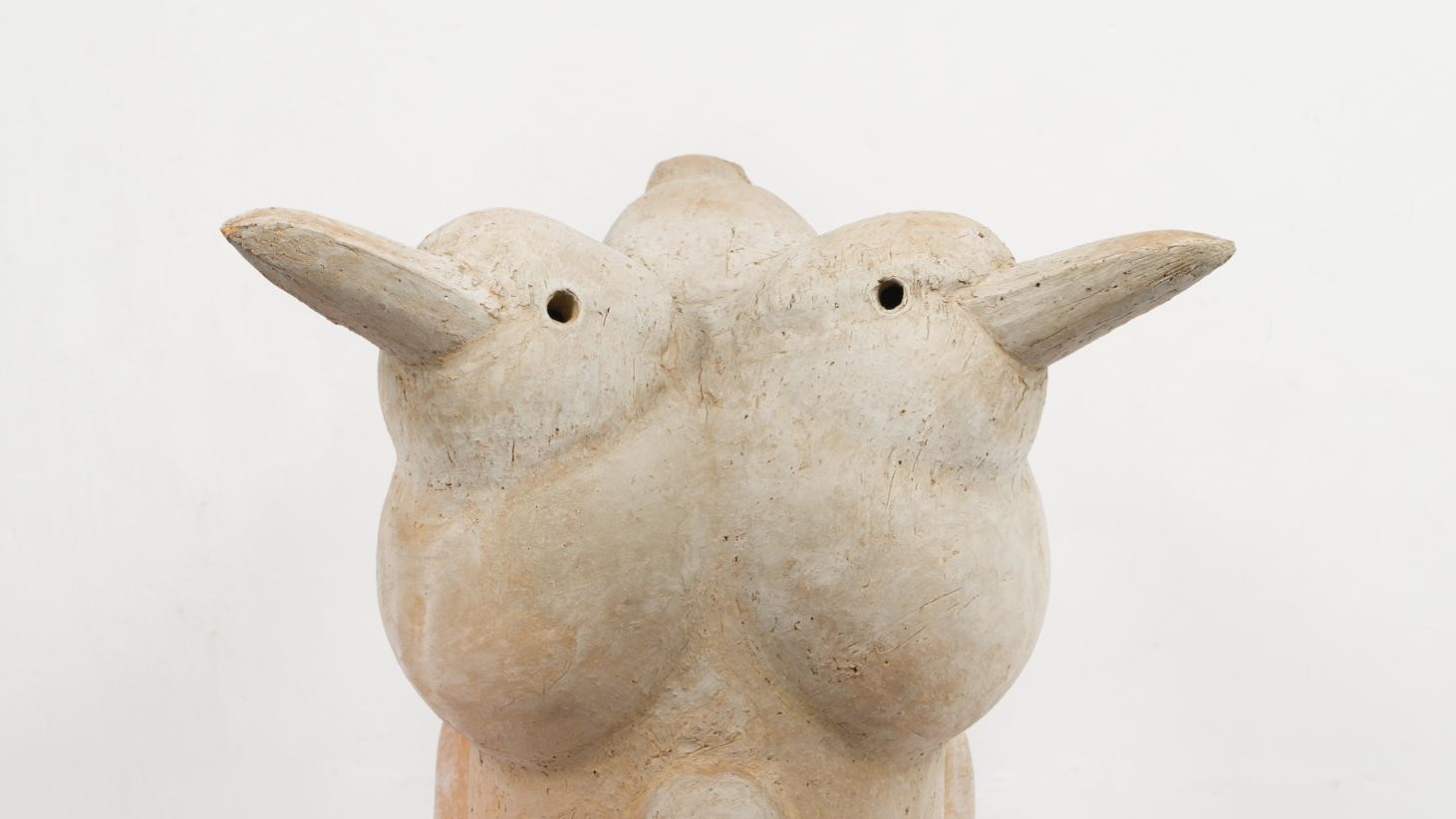
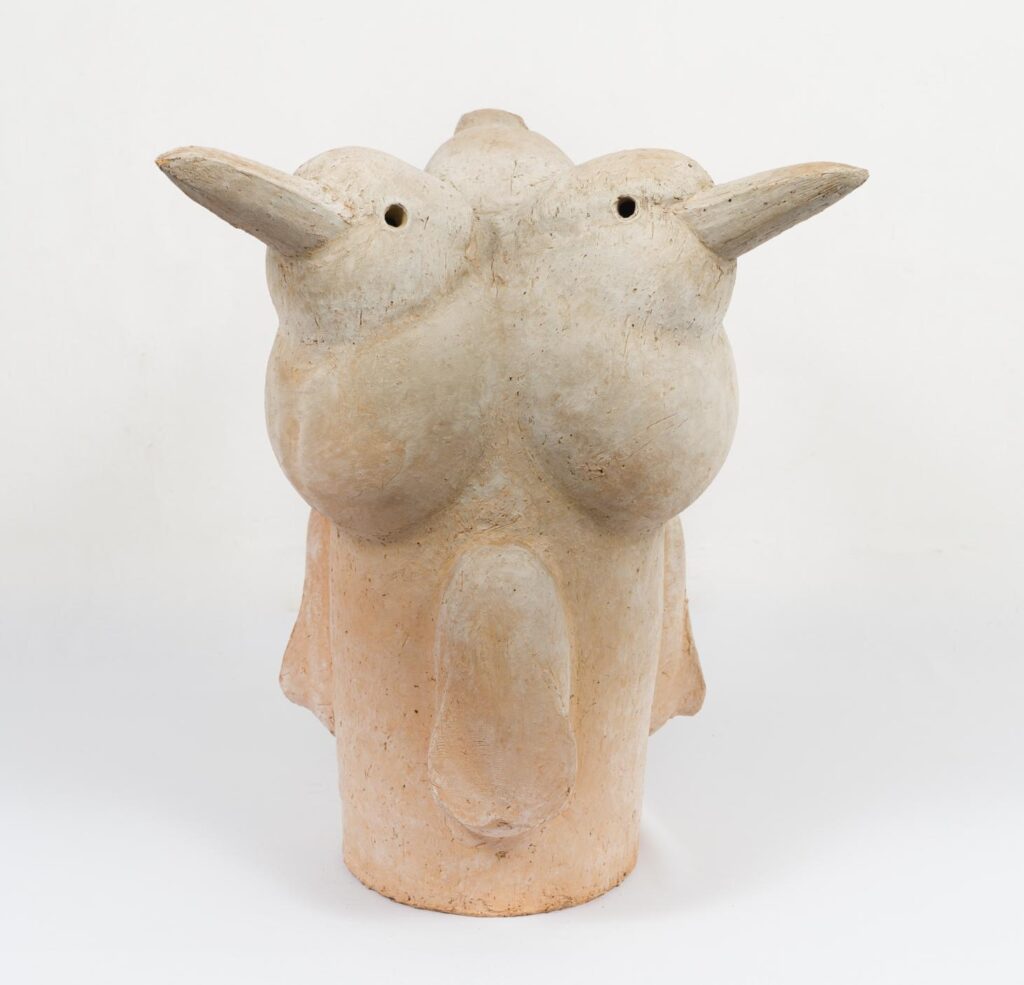
Égida (Momotide).
Glazed earthenware.
24 x 19 x 19 in / 62 x 48 x 48 cm.
Made in 2023.
From the series of three-headed, gargoyle-like vessels with 360º
vision. Various animals are represented in the Égida series, all associated with or endemic to the Northern Andes. They are either mythological, elusive, nocturnal, or at risk of extinction.
The series also includes depictions of serpents, marmosets, jaguarundis, bats and owls.
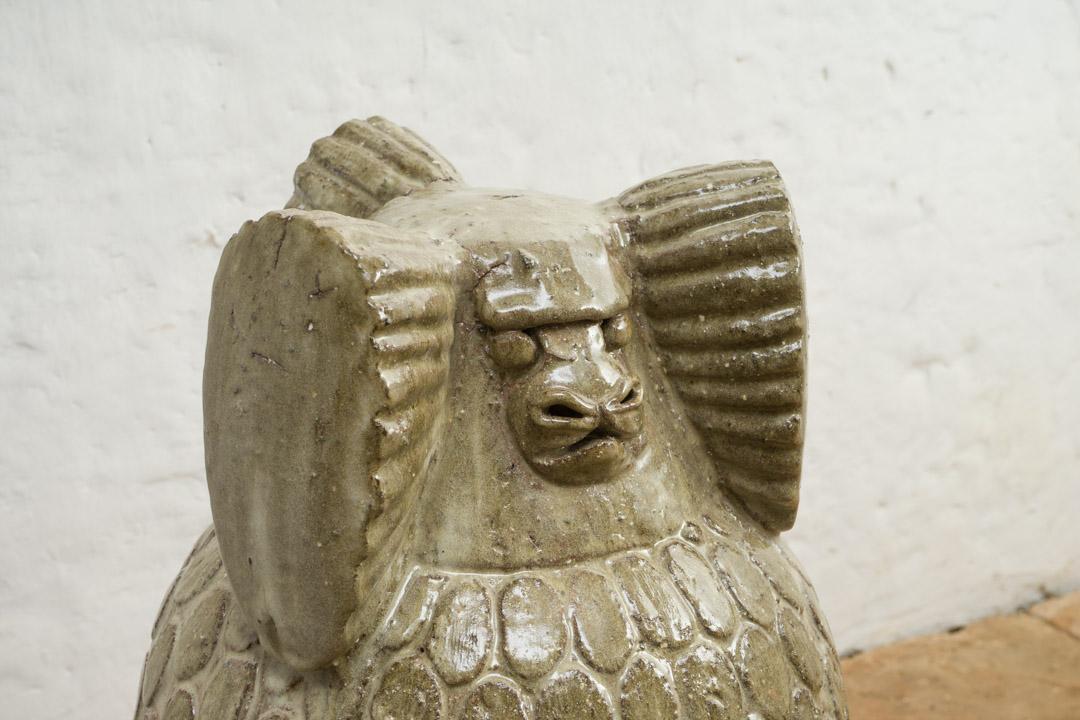
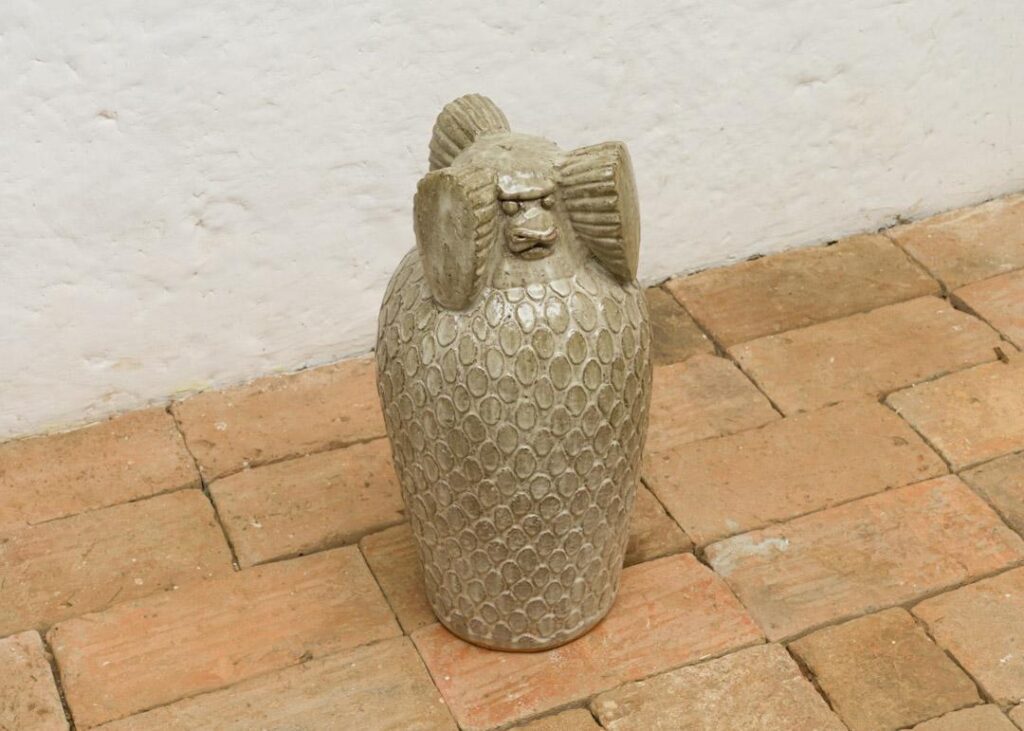
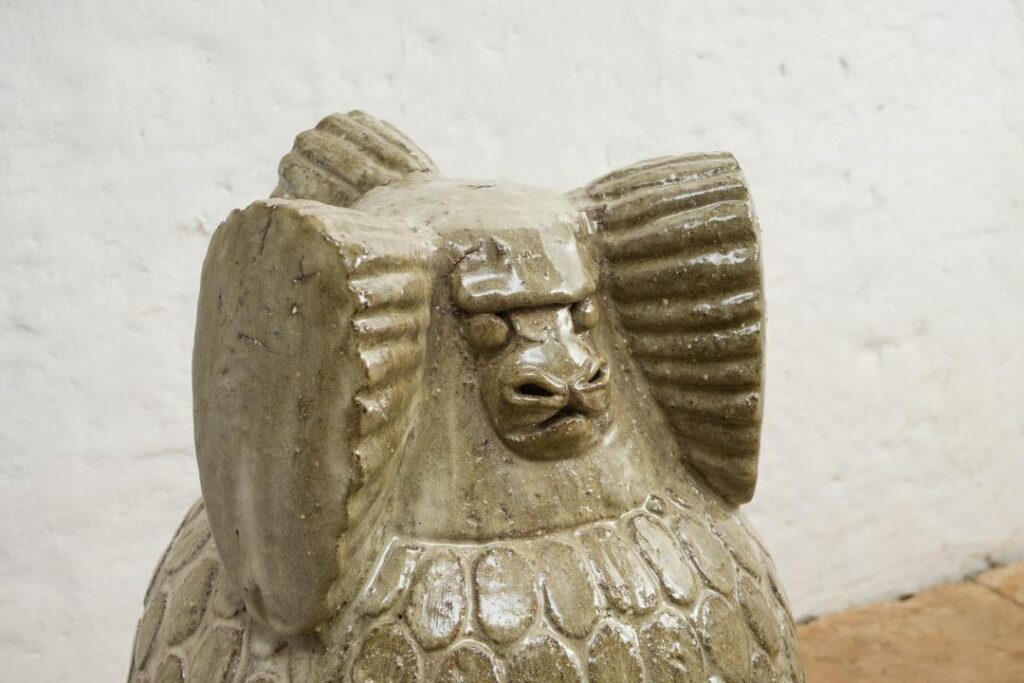
Égida (tití).
Glazed earthenware.
25.8 x 14 x 12.8 in / 65.5 x 33.5 x 32.5 cm.
Made in 2023.
From the series of three-headed, gargoyle-like vessels with 360º
vision. Various animals are represented in the Égida series, all associated with or endemic to the Northern Andes. They are either mythological, elusive, nocturnal, or at risk of extinction.
The series also includes depictions of serpents, marmosets, jaguarundis, bats and owls.
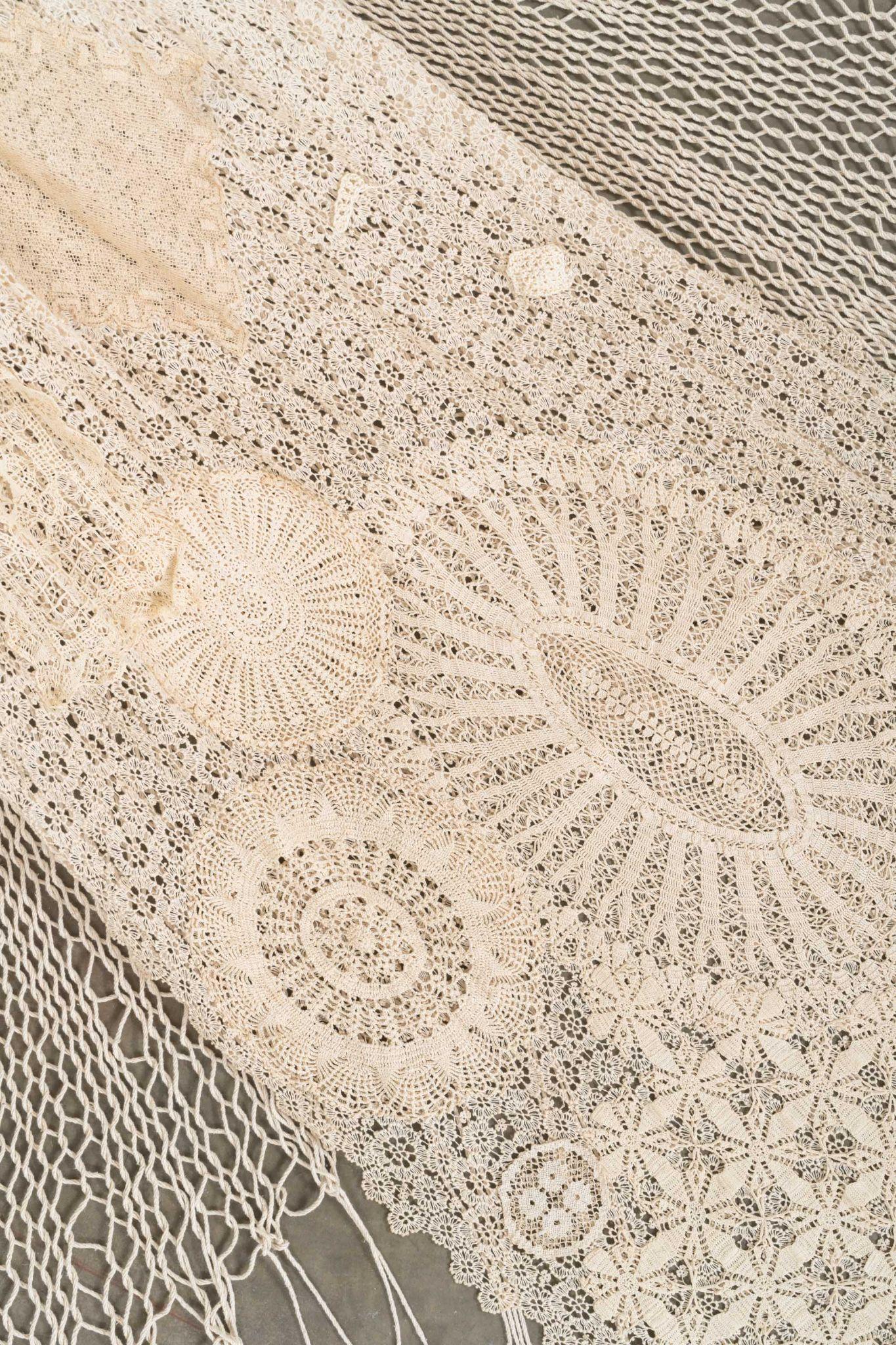
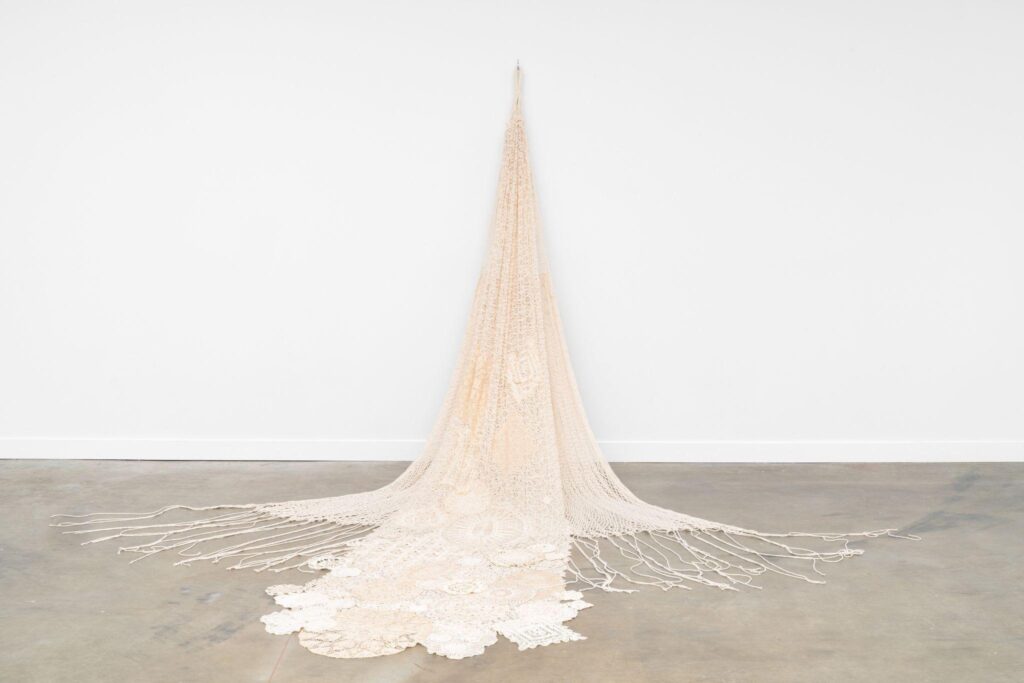
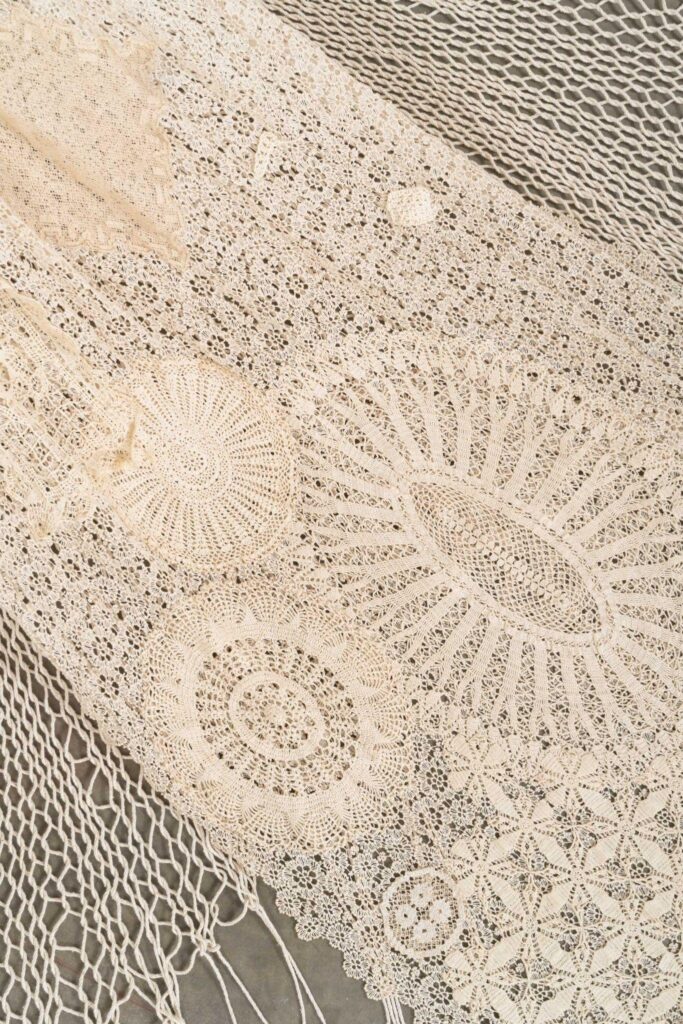
Velo hamaca.
Cotton hammock, crocheted doilies.
60 x 72 x 72 in / 24 x 25 x 18 cm.
Made in 2023.
In collaboration with Juan Manuel Ortiz Maya.
In the words of Drew Zeiba “Monzón-Aguirre’s alternative history—which traverses the patriarchal and racialized distinctions of craft, decoration, and fine art—is likewise asserted in the Velo hamaca, or hammock veil. Made in collaboration with the artist’s uncle, Juan Manuel Ortiz, who for years has crocheted doilies for use in the home, the hanging textile manifests an intergenerational connection that allows for a transhistorical restructuring of gendered norms.”

Manilla (mariposas).
Earthenware, fique rope.
307.1 × 17.7 × 4.3 in / 735 cm x 60 x 10 cm
Made in Colombia in 2023-2025.
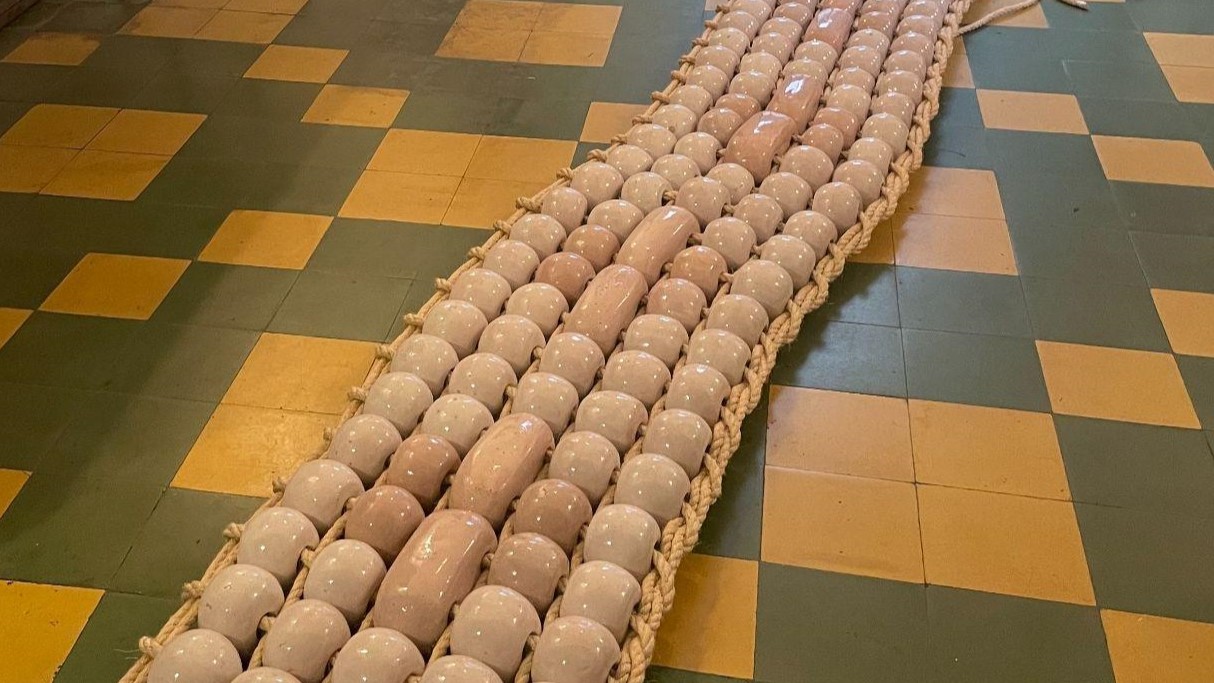
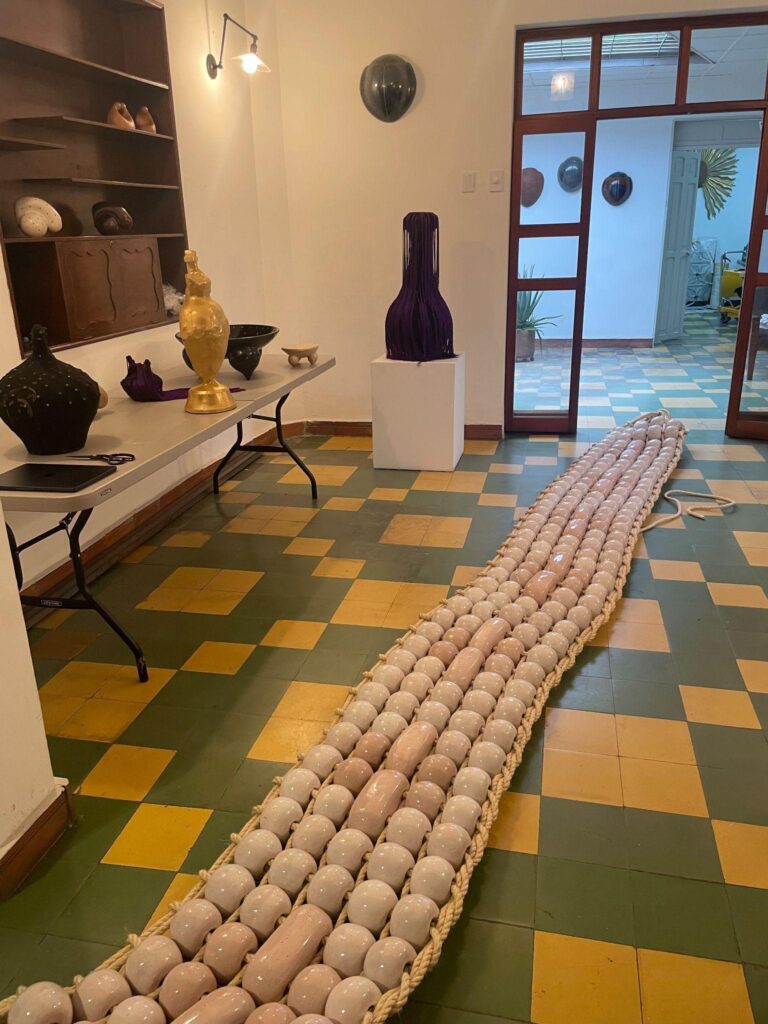
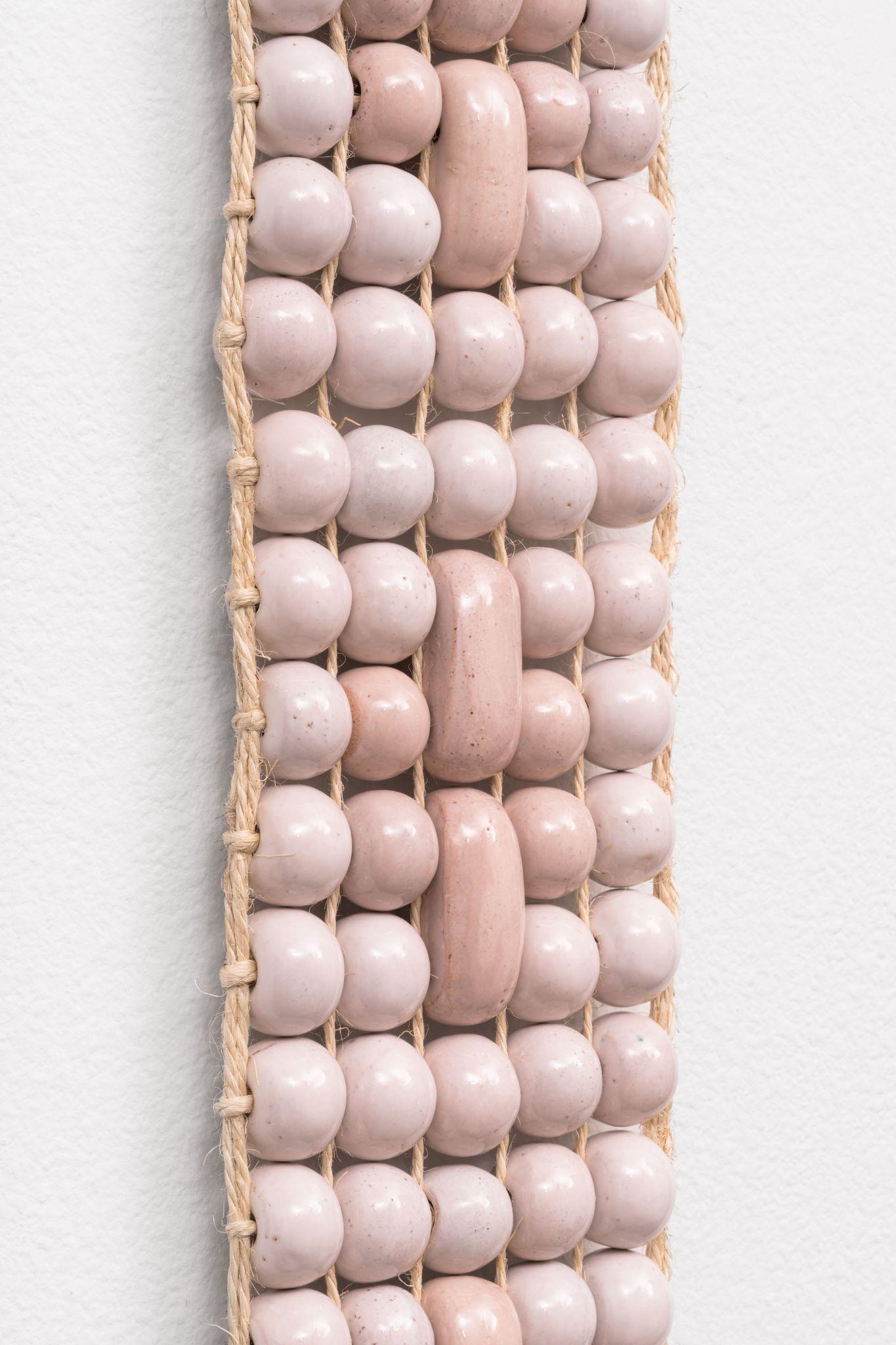
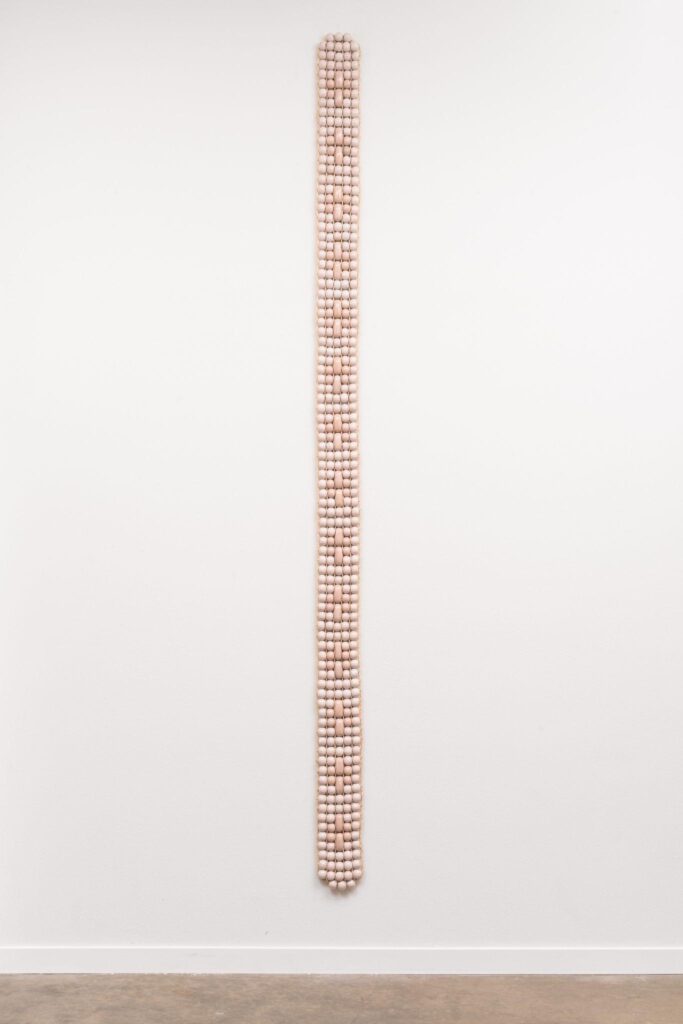
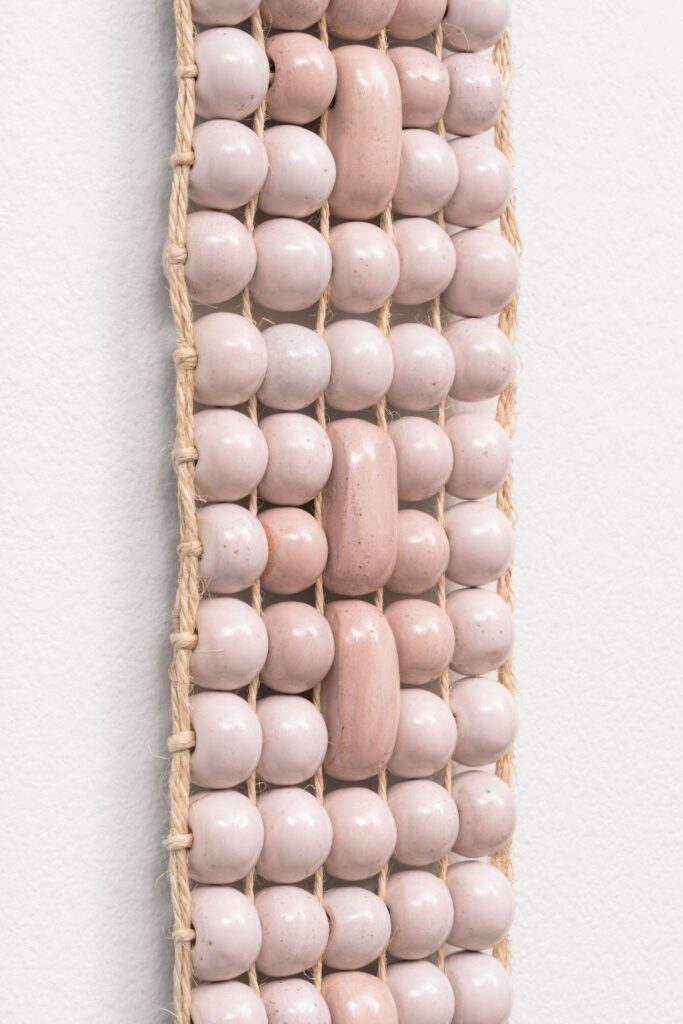
Manilla (mariposas) is a 25-foot tall beaded bracelet woven with fique rope. The motif repeated throughout is an abstraction of a penis and its reflection that also represents a butterfly, as indicated by the title. The male organ is present here in a coded and feminized way. In this work, the enlarged scale of the bracelet and its coded pattern transform an everyday object into a monument to quiet resistance.
This piece also alludes to the artisanal and symbolic
practices of weaving as acts of resistance, identity, and
communal connection. Beads have traditionally been used in
the creation of objects with ritual, aesthetic, and social value
in various communities of the region, and are associated
with the domestic and the feminine. In this work, the
enlarged scale of the bracelet and its coded pattern
transform an everyday object into a monument to resistance
and human bonds.
Manilla (mariposas).
Earthenware, fique.
115 x 8.6 x 1.6 in / 292 x 22 x 4 cm.
Made in 2023.
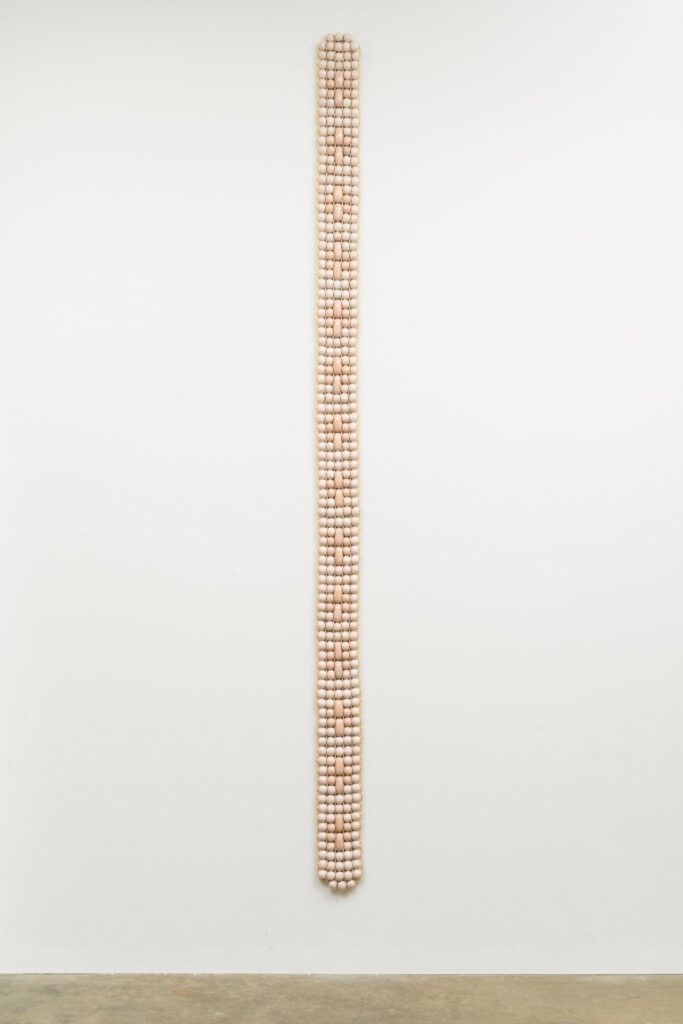
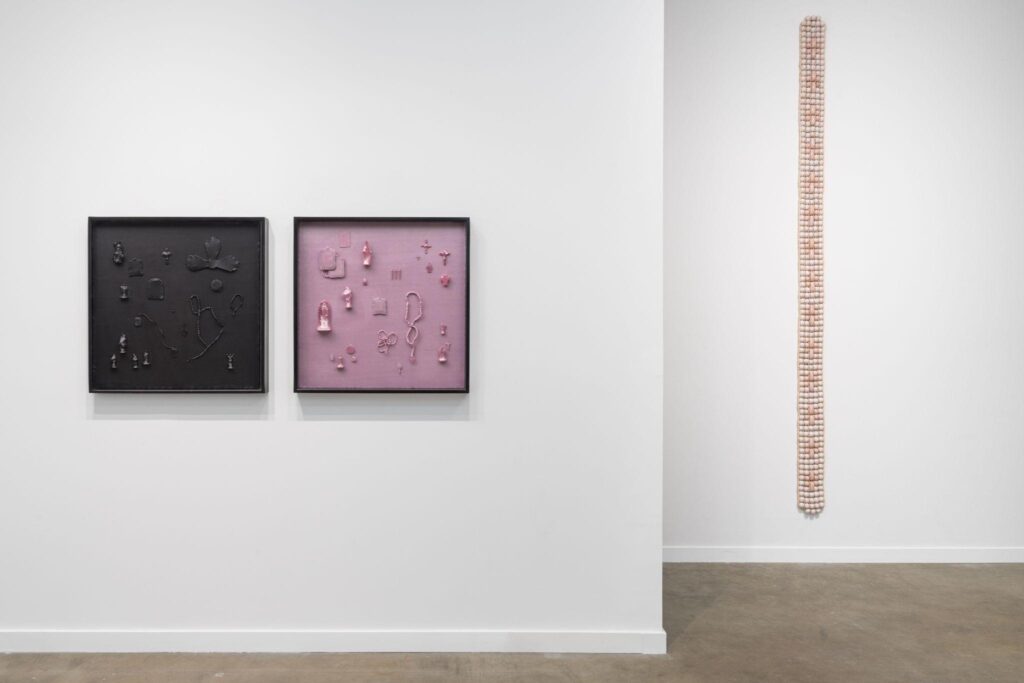
Spanning 10 feet, Manilla (mariposas) is a vertical wall piece resembling a glass bead bracelet with a repeating, butterflying, penis motif.
![Joven [Youth]](https://asicazmonzon.com/wp-content/uploads/2026/06/2023_07_19_STARS13470-1.jpg)
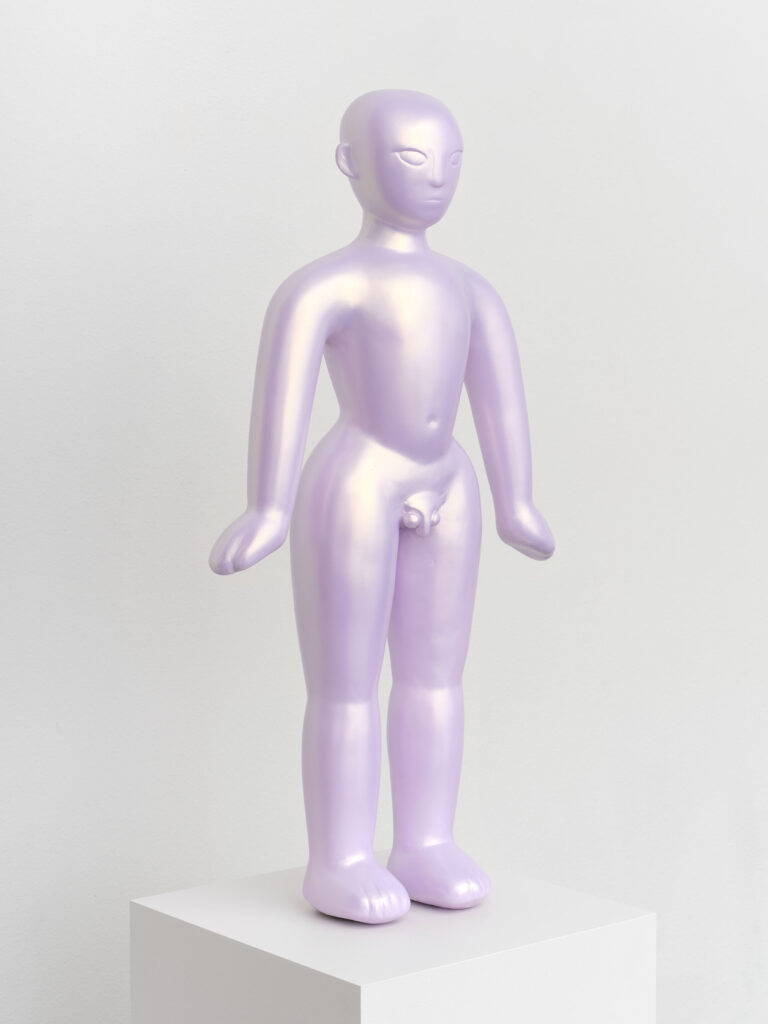

Joven [Youth].
Earthenware, nail polish.
35 x 18 x 7 in / 89 x 46 x 17 cm.
Made in 2022-2023.
Referencing a Quimbaya poporo from the fifth or sixth Century C.E.
and other depictions of standing figures from the Northern Andes, the
ceramic Joven [Youth] resembles an archaeological find. However,
instead of having a bare earthenware surface or vitreous glaze finish, it is coated with nail polish, a gesture that toys with the artifice of gender and the unstable boundaries between the modern and the ancient, the original and the reproduction.
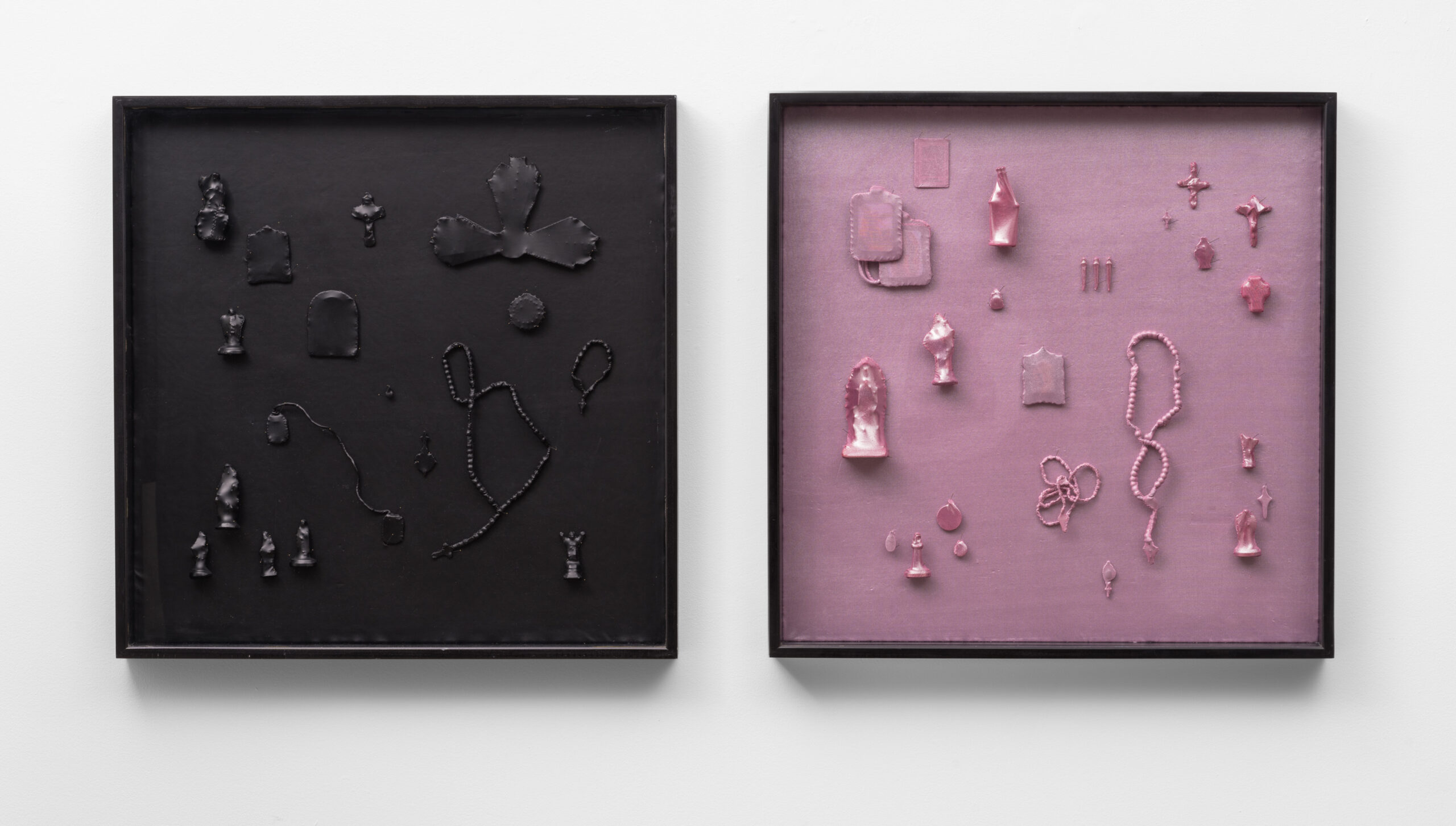
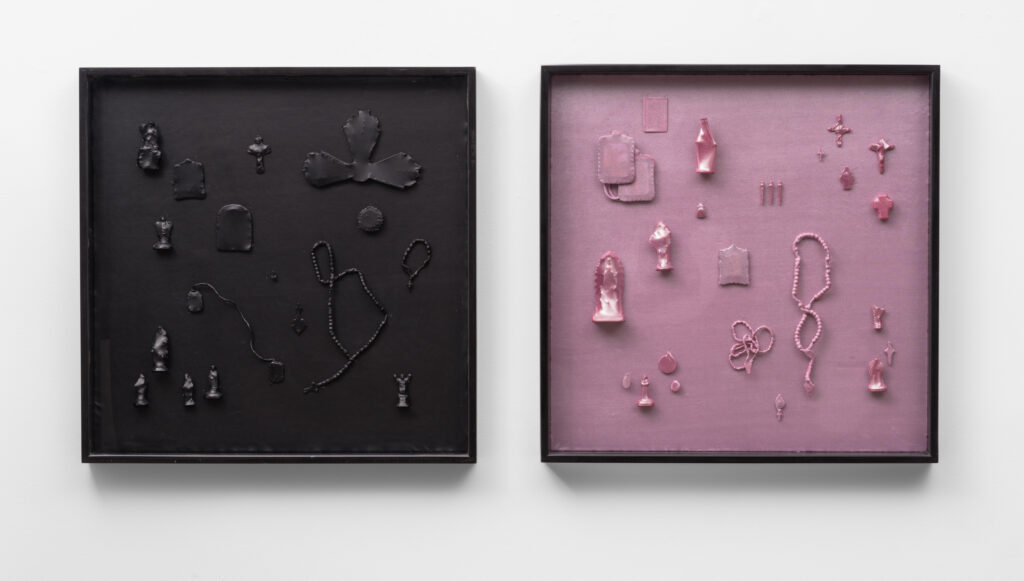
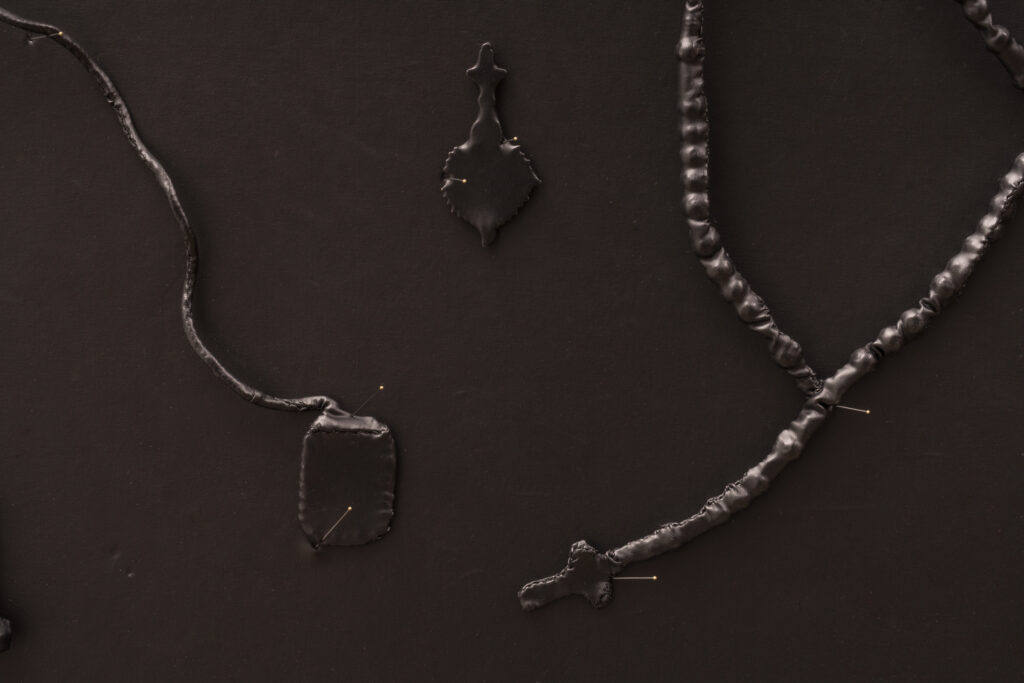
Leyenda.
Found objects, fabric, entomology case.
30 x 30 x 2.5 in / 76 x 76 x 6.4 cm.
Made in 2023-2024
Leyenda is a diptych wall piece giving form to the indeterminate boundaries between cultural reclamation and “ownership” contrived by states and sciences alike. It is comprised of wrapped rosaries, statuettes of saints, and other objects of worship, set in entomological boxes.
The title refers to propaganda campaigns, collectively called Leyenda negra and Leyenda rosa. Leyenda negra began in the 16th century by Dutch and English colonists to portray their Spanish rivals as uniquely violent. Spain retorted with their own Leyenda rosa, their rose-tinted take on their purportedly divinely mandated conquest and colonial activities.
Exemplifying multifarious readings of past and present, Leyenda might be interpreted simultaneously as an observation on collective, even internalized hispanophobia as well as—in the other hand—a smoothing of the impacts of proselytization and settlerism in the Americas.